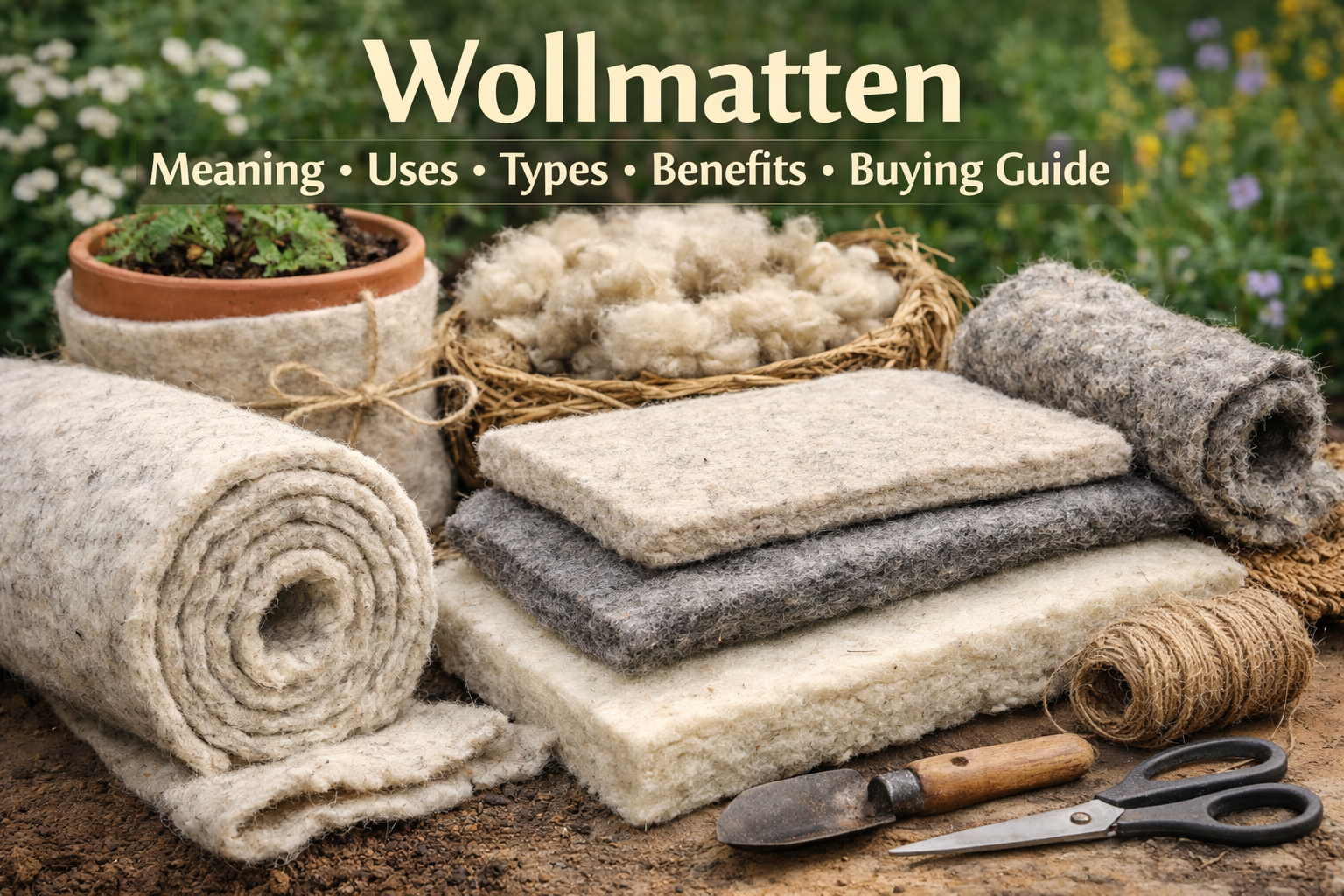
Wollmatten are mats made from natural sheep wool. They are used for many purposes such as gardening, home insulation, decoration, crafts, and outdoor use. Many people choose wollmatten because they are natural, safe, and friendly to the environment.
Today, more people want natural materials instead of plastic or synthetic products. Wool is a renewable material. It is breathable, warm, and long-lasting. Because of this, wollmatten have become more popular in homes, gardens, and buildings Assimilasjon
This article explains wollmatten in very simple English. It covers what wollmatten are, how they are made, where they are used, their benefits, their limits, and how to choose the right one. This guide is useful for beginners and anyone who wants clear information.
What Are Wollmatten?
Wollmatten are flat mats made from sheep wool. The wool is cleaned and processed, then shaped into sheets or rolls. These mats can be thin or thick depending on how they will be used.
Simple Meaning of Wollmatten
Wollmatten are wool mats made from sheep wool. They are used for insulation, protection, decoration, and comfort.
Source of the Wool
The wool comes from sheep. After sheep are sheared, the wool goes through these steps:
-
Cleaning to remove dirt
-
Drying
-
Processing into fibers
-
Pressing or binding into mats
The final product is a soft but strong mat.
How Wollmatten Are Made
The way wollmatten are made changes how strong, thick, and flexible they are.
Basic Making Process
Most wollmatten follow this process:
-
Wool is collected from sheep
-
Wool is washed and cleaned
-
Fibers are spread evenly
-
Fibers are pressed or needled together
-
Mats are cut into sizes
Common Production Methods
| Method | How It Works | Result |
|---|---|---|
| Needle-punched | Fibers are pressed together with needles | Strong and flexible |
| Felted | Heat and moisture compress fibers | Dense and smooth |
| Layered | Wool layers stacked | Thick insulation |
Each method is used for different purposes.
Main Uses of Wollmatten
Wollmatten are very flexible products. They can be used in many areas.
Wollmatten for Garden and Plant Protection
One of the most common uses is in gardens. Wollmatten protect plants during cold weather.
They help by:
-
Keeping roots warm
-
Protecting plants from frost
-
Holding moisture in soil
-
Reducing temperature changes
Gardeners often wrap wollmatten around pots or place them on soil.
Garden Benefits
-
Insulates even when wet
-
Breathable material
-
Natural and chemical-free
-
Can be reused every year
Wollmatten for Home and Building Insulation
Wollmatten are also used for insulation in buildings.
They can be placed in:
-
Walls
-
Roofs
-
Floors
-
Ceilings
Wool helps keep heat inside during winter and keeps rooms cooler in summer.
Why Wool Is Good for Insulation
| Property | Benefit |
|---|---|
| Air pockets | Trap warm air |
| Breathable | Reduces moisture |
| Flexible | Fits tight spaces |
| Natural | Healthy indoor air |
Wollmatten for Crafts and Decoration
Thin wollmatten are often used for decoration and crafts.
They are used for:
-
Table mats
-
Wall panels
-
DIY projects
-
Furniture covering
-
Decorative items
They are easy to cut and shape.
Woll matten for Outdoor and Special Uses
Some woll matten are made for outdoor use.
Examples include:
-
Camping mats
-
Outdoor seating pads
-
Bushcraft mats
-
Protective ground covers
These mats may be combined with other materials for strength.
Types of Woll matten
There are many types of woll matten. The type depends on thickness, structure, and use.
Felt Woll matten
Felt woll matten are smooth and firm.
Used for:
-
Crafts
-
Decoration
-
Light insulation
Needle-Punched Woll matten
These mats are stronger and more flexible.
Used for:
-
Home insulation
-
Garden protection
-
Sound insulation
Thin, Medium, and Thick Woll matten
| Type | Thickness | Best Use |
|---|---|---|
| Thin | 3–5 mm | Decor, crafts |
| Medium | 10–30 mm | Garden use |
| Thick | 40 mm or more | Building insulation |
Natural and Treated Woll matten
Some woll matten are fully natural. Others are treated to:
-
Reduce pests
-
Improve fire resistance
-
Increase durability
Always read product details before buying.
Main Materials and Features
Woll matten have special natural features.
Material Used
-
Mostly 100% sheep wool
-
Sometimes mixed with natural binders
Important Natural Features
-
Strong insulation
-
Moisture control
-
Breathable fibers
-
Soft but durable
-
Odor control
Moisture Handling
Wool can absorb moisture and still feel dry. This helps:
-
Prevent mold
-
Keep insulation working
-
Improve air quality
Benefits of Woll matten
Woll matten offer many benefits compared to synthetic mats.
Key Benefits
-
Natural and eco-friendly
-
Renewable resource
-
Biodegradable
-
Safe for health
-
Long-lasting
Environmental Benefits
| Feature | Benefit |
|---|---|
| Renewable | Wool grows back |
| Biodegradable | No plastic waste |
| Low pollution | Less energy used |
| Natural fibers | No toxic chemicals |
Health Benefits
-
No harmful fumes
-
Better indoor air
-
Comfortable to touch
-
Breathable material
How to Choose the Right Wollmatte
Choosing the right wollmatte depends on your needs.
Choosing by Size
Think about:
-
Area to cover
-
Shape of the space
-
Ease of cutting
Large mats are better for insulation. Small mats are better for decoration.
Choosing by Thickness
| Purpose | Best Thickness |
|---|---|
| Decoration | Thin |
| Gardening | Medium |
| Insulation | Thick |
Choosing by Use
Ask yourself:
-
Is it indoor or outdoor?
-
Will it get wet?
-
Do I need warmth or decoration?
Answering these questions helps you choose correctly.
How to Use Wollmatten
Wollmatten are easy to use in many situations.
Using Wollmatten in the Garden
Steps:
-
Clean the area
-
Place mat around plants or pots
-
Secure with string if needed
-
Check during cold months
Using Wollmatten for Insulation
Steps:
-
Measure the space
-
Cut the mat to size
-
Place mat into wall or roof
-
Fix securely
Using Wollmatten for Crafts
Steps:
-
Mark the design
-
Cut with scissors
-
Attach with glue or pins
-
Finish edges neatly
Care and Maintenance of Wollmatten
Proper care helps woll matten last longer.
Cleaning Tips
-
Shake off dirt
-
Spot clean with water
-
Avoid harsh chemicals
-
Dry naturally
Storage Tips
-
Store in dry places
-
Use breathable bags
-
Protect from moths
-
Avoid damp areas
Advantages and Disadvantages of Woll matten
Advantages
-
Natural material
-
Good insulation
-
Breathable
-
Environment-friendly
-
Comfortable to use
Disadvantages
-
Higher cost
-
Needs protection from pests
-
Not fully waterproof
-
Heavier than plastic mats
Pros and Cons Table
| Pros | Cons |
|---|---|
| Eco-friendly | Costs more |
| Insulates well | Needs care |
| Breathable | Limited water resistance |
| Natural | Can attract moths |
Who Should Use Woll matten?
Woll matten are good for:
-
Gardeners
-
Homeowners
-
Builders
-
Craft lovers
-
Eco-friendly users
They are ideal for people who prefer natural products.
Why Woll matten Are Becoming More Popular
People care more about:
-
Environment
-
Health
-
Sustainability
Woll matten support all these goals naturally.
FAQs
Are woll matten waterproof?
No. They are not fully waterproof, but they still insulate when damp.
Can woll matten be recycled?
Yes. Wool is biodegradable and recyclable.
How long do woll matten last?
With proper care, they can last many years.
Are woll matten safe indoors?
Yes. They are safe and improve air quality.
Conclusion
Woll matten are natural wool mats with many uses. They work well for gardening, insulation, decoration, crafts, and outdoor activities. Their natural features make them safe, breathable, and environmentally friendly, although woll matten may cost more than synthetic mats, they last longer and are better for health and nature. With proper care, they can be used for many yearschoosing woll matten means choosing comfort, sustainability, and n, atural quality.