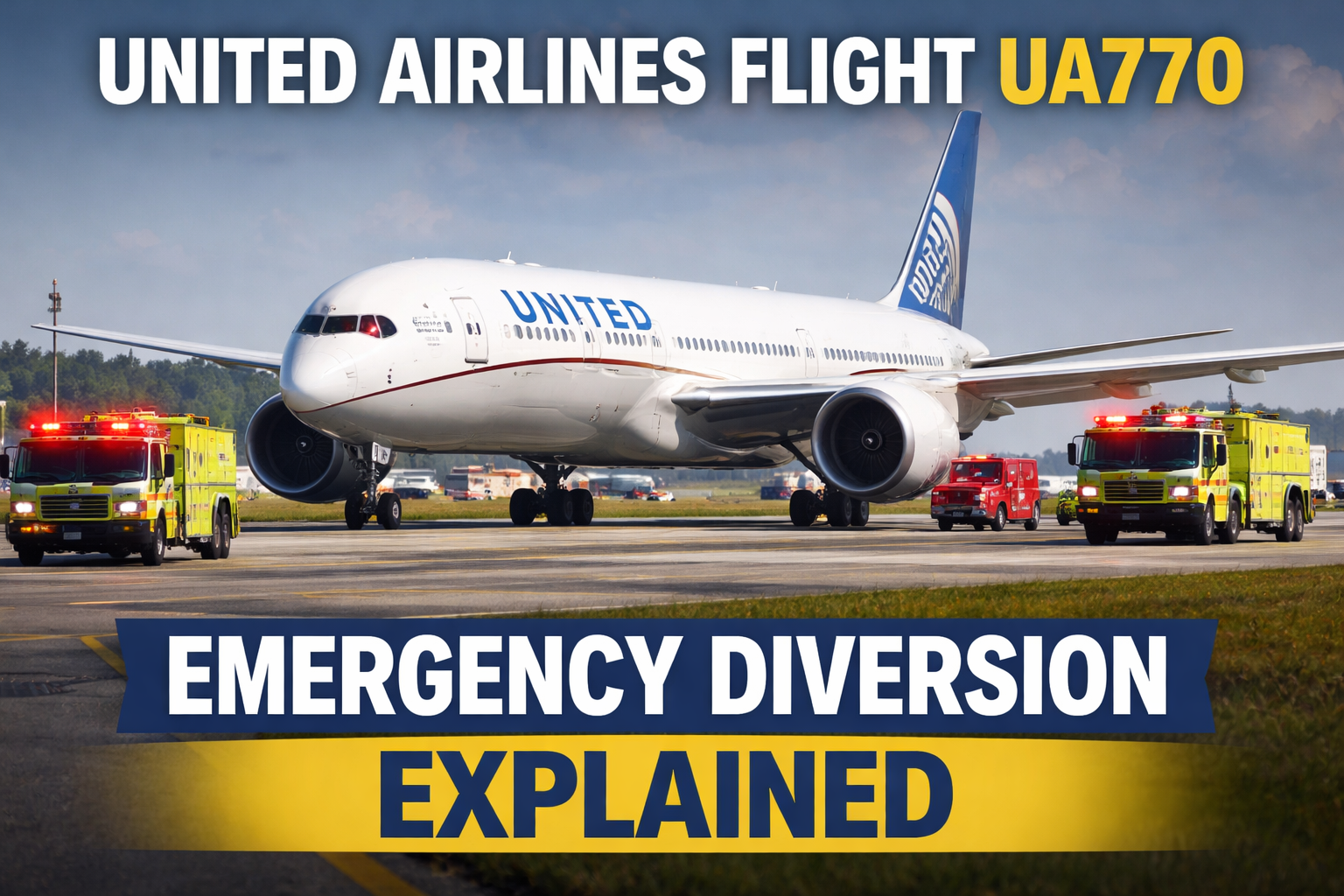
United Airlines Flight UA770 Emergency Diversion air travel is one of the safest ways to move around the world. Still, sometimes flights do not go exactly as planned. One such case was United Airlines Flight UA770, which made an emergency diversion during its journey. Even though the flight did not reach its planned destination on time, the most important fact is that everyone landed safely Delta Flight
This article explains the UA770 emergency diversion in basic and simple English. It avoids technical language as much as possible and follows a clear structure. You will learn what happened, why the diversion took place, how the crew handled the situation, and what it means for passenger safety.
Basic Information About United Airlines Flight UA770
United Airlines Flight UA770 was a long-distance commercial flight operated by United Airlines. Like many international flights, it used a large and modern aircraft designed for comfort and safety.
Key Flight Details
| Item | Information |
|---|---|
| Airline | United Airlines |
| Flight Number | UA770 |
| Aircraft | Boeing 787 Dreamliner |
| Flight Type | Long-haul commercial flight |
| Event | United Airlines Flight UA770 Emergency Diversion |
| Result | Safe landing, no injuries |
The Boeing 787 Dreamliner is known for advanced safety systems, modern technology, and strong backup features. These systems help pilots detect problems early and act before they become serious.
What Is an Emergency Diversion?
An United Airlines Flight UA770 Emergency Diversion happens when a flight changes its planned route and lands at a different airport. This decision is made when pilots believe it is safer to land sooner rather than continue United Airlines Flight UA770 Emergency Diversions do not always mean danger. Many diversions are done as a precaution.
Common Reasons for United Airlines Flight UA770 Emergency Diversion
-
Technical or system warnings
-
Medical emergencies involving passengers
-
Weather changes
-
Airport issues at the destination
-
Safety concerns inside the cabin
In the case of Flight UA770, the diversion was linked to a technical alert, not an accident or crash.
Timeline of the UA770 Emergency Diversion
Understanding the timeline helps explain why the crew acted the way they did.
Normal Departure and Early Flight
Flight UA770 departed normally from its departure airport. Pre-flight checks were completed, and there were no public reports of problems during takeoff.
During the early part of the flight:
-
Weather conditions were acceptable
-
Aircraft systems were operating normally
-
The flight reached cruising altitude as planned
At this stage, passengers experienced a regular flight.
Detection of a Technical Alert
Later in the flight, cockpit instruments showed a system warning. Reports from multiple sources suggest the warning was related to cabin pressurization.
A warning does not mean something has failed. It means a system is showing unusual readings that need attention.
Pilots are trained to treat these alerts seriously, even if the issue seems small.
Emergency Declaration to Air Traffic Control
After reviewing the alert, the pilots informed air traffic control and declared an emergency.
They used a special emergency code called Squawk 7700.
What Squawk 7700 Means
-
It tells air traffic control the aircraft needs priority
-
Other planes are moved out of the way
-
The flight receives direct routing
-
Emergency services prepare on the ground
Using Squawk 7700 is a safety step, not a sign of panic.
Decision to Divert the Aircraft
The pilots decided not to continue to the original destination. Instead, they chose to land at a nearby airport that could safely handle the aircraft.
Why Pilots Choose to Divert
Pilots consider many factors, such as:
-
Distance to the nearest suitable airport
-
Runway length and strength
-
Weather conditions
-
Availability of emergency and maintenance teams
-
Safety of passengers and crew
In this case, the chosen airport had full emergency support and facilities for large aircraft.
Safe Landing and Ground Response
Flight UA770 landed safely at the diversion airport. Emergency vehicles were present as a precaution.
After landing:
-
The aircraft taxied to a safe area
-
Emergency teams checked the plane
-
Passengers remained on board until cleared
-
No evacuation was needed
There were no reported injuries.
Understanding Cabin Pressurization in Simple Terms
Cabin pressurization helps people breathe comfortably at high altitudes. Outside air at cruising altitude is too thin for humans.
How Cabin Pressurization Works
-
Air is taken from the engines
-
It is cooled and cleaned
-
Pressure inside the cabin is controlled
-
Sensors constantly check pressure levels
If pressure readings change unexpectedly, the system alerts the pilots.
Why Pressurization Alerts Matter
Even small pressurization issues are treated seriously because:
-
Low oxygen can affect passengers quickly
-
Symptoms may not appear right away
-
Safety rules require early action
Most pressurization alerts lead to precautionary landings, not emergencies with danger.
How the Flight Crew Handled the Situation
Pilot Actions
Pilots follow clear procedures during abnormal situations. United Airlines Flight UA770 Emergency Diversion do not guess or improvise.
Their actions include:
-
Reading step-by-step checklists
-
Monitoring system data
-
Communicating with air traffic control
-
Choosing the safest option
Training prepares pilots for these moments through repeated simulator practice.
Cabin Crew Responsibilities
Cabin crew focus on passenger safety and comfort.
Their duties during the diversion included:
-
Making calm announcements
-
Keeping passengers informed
-
Ensuring seatbelts were fastened
-
Watching for passengers who needed help
Clear communication helps reduce fear and confusion.
Passenger Experience During the Diversion
From a passenger point of view, an United Airlines Flight UA770 Emergency Diversion can be stressful. However, most passengers experience the event calmly.
Common passenger experiences include:
-
Hearing announcements about a change in plans
-
Feeling the aircraft descend earlier than expected
-
Seeing emergency vehicles after landing
-
Waiting on the ground for updates
Passengers are usually not told technical details to avoid unnecessary worry.
Aircraft Inspection After Landing
Once the plane was on the ground, engineers began inspections.
Typical Inspection Steps
| Step | Purpose |
|---|---|
| Visual checks | Look for visible issues |
| System tests | Review alert data |
| Maintenance review | Confirm safety |
| Approval process | Decide if aircraft can fly again |
The aircraft is only returned to service after engineers confirm everything is safe.
United Airlines’ Response After the Diversion
Airlines follow set procedures after United Airlines Flight UA770 Emergency Diversion.
Airline Actions
-
Release an official statement
-
Support passengers
-
Coordinate with airport staff
-
Arrange alternate flights
United Airlines focused on passenger care and safety.
Passenger Support and Rebooking
After landing, passengers were assisted with:
-
Rebooking on later flights
-
Hotel stays if needed
-
Meal vouchers
-
Ground transportation
Support depends on delay length and local rules.
Role of Aviation Authorities
Sometimes United Airlines Flight UA770 Emergency Diversion aviation authorities review incidents even if they are minor.
Possible authorities involved include:
-
National aviation regulators
-
Aircraft manufacturers
-
Airline safety teams
The goal is to learn and improve safety, not assign blame.
How Common Are United Airlines Flight UA770 Emergency Diversion?
Emergency and precautionary diversions happen every day around the world.
Common Reasons Flights Divert
-
Medical emergencies
-
Technical alerts
-
Weather problems
-
Airport closures
-
Safety concerns
Considering the thousands of daily flights, diversions are a normal part of aviation safety.
Why Emergency Diversions Are a Good Sign
Many people think United Airlines Flight UA770 Emergency Diversion mean something went wrong. In reality, they often mean everything worked correctly.
What Diversions Show
-
Early warning systems are effective
-
Pilots act conservatively
-
Safety comes before schedules
-
Backup systems are reliable
United Airlines Flight UA770 Emergency Diversion is an example of prevention, not failure.
Media Coverage and Public Discussion
News reports and social media posts spread information quickly. Some reports about United Airlines Flight UA770 Emergency Diversion were unclear or conflicting.
This shows why it is important to:
-
Rely on verified information
-
Understand aviation terms
-
Avoid panic based on headlines
Not all online reports reflect confirmed facts.
Key Lessons United Airlines Flight UA770 Emergency Diversion
Lessons for Passengers
-
Diversions are normal safety actions
-
Pilots are trained for these events
-
Commercial flying remains very safe
Lessons for Airlines
-
Clear communication builds trust
-
Transparency reduces confusion
Lessons for Aviation
-
Safety systems continue to improve
-
Data from incidents helps prevent future problems
FAQs
Was anyone hurt on United Airlines Flight UA770 Emergency Diversion?
No injuries were reported.
Was the aircraft in danger?
There is no sign of immediate danger. The diversion was precautionary.
Why did the plane not continue its journey?
Safety rules require landing when system alerts appear.
Do United Airlines Flight UA770 Emergency Diversion happen often?
Yes, they are common and part of normal operations.
Conclusion
The United Airlines Flight UA770 Emergency Diversion shows how modern aviation safety works in real life. A system alert was detected, the crew followed procedures, air traffic control provided support, and the aircraft landed safely, while the word “emergency” can sound frightening, this event shows the strength of aviation safety systems. Every step, from early warning to passenger care, was focused on protecting lives, commercial air travel remains one of the safest ways to travel. Events like the UA770 diversion prove that safety comes first, even when it causes delays or changes in plans.