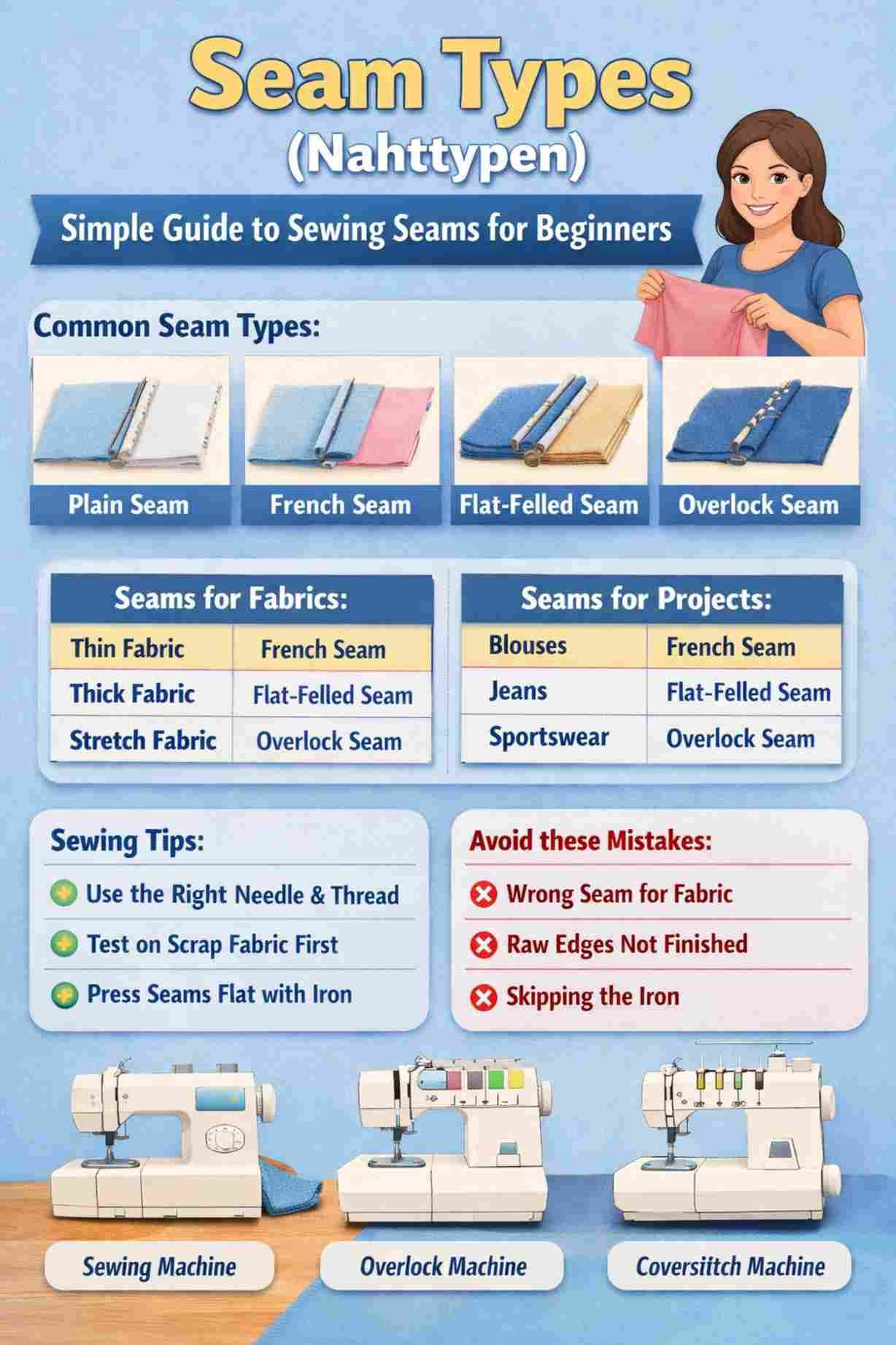
Sewing is not only about joining two pieces of fabric. The type of seam you use is very important. It affects:
-
✅ how strong the project is
-
✅ how long it lasts
-
✅ how comfortable it feels
-
✅ how clean and professional it looks
Whether you are sewing clothes, bags, home items, or sportswear, choosing the right seam type (Nahttypen) can make your project look neat and last much longer. This simple guide explains the most common seam types, where to use them, and how to avoid common mistakes.
1. What Are Seam Types?
Seam types describe how two pieces of fabric are joined together and how the raw edges are finished.
It is important to know the difference between a stitch and a seam:
| Term | Meaning | Example |
|---|---|---|
| Stitch | The way the needle moves | Straight stitch |
| Seam | How fabric pieces are joined | French seam |
Why seam types matter
Seam types help to:
-
make clothes stronger
-
stop fabric from fraying
-
improve comfort on the skin
-
give a clean look inside and outside
2. Main Seam Types – Simple Overview
Here are some common seam types used in sewing:
| Seam Type | Main Features | Best For |
|---|---|---|
| Plain seam | Easy and fast | Most sewing projects |
| French seam | Clean inside, no raw edges | Thin and soft fabrics |
| Flat-felled seam | Very strong and flat | Jeans, work clothes |
| Overlock seam | Stretchy, finished edges | T-shirts, knit fabric |
| Flat seam | Soft on skin, no thick edges | Sports and activewear |
3. Plain Seam (Basic Seam)
The plain seam is the most common seam.
Two pieces of fabric are placed right sides together and sewn with a straight stitch.
Advantages
-
easy for beginners
-
fast to sew
-
works for many projects
Disadvantages
-
raw edges can fray
-
needs extra finishing (zigzag or overlock)
Read also: Calesshop
4. French Seam
A French seam hides the raw edges inside the seam.
It is sewn in two steps.
Best for
-
thin fabrics (silk, chiffon, cotton voile)
-
light blouses and dresses
Pros and Cons
| Pros | Cons |
|---|---|
| Clean and neat inside | Takes more time |
| No raw edges | Not good for thick fabric |
| Looks professional | Needs careful measuring |
5. Flat-Felled Seam
A flat-felled seam is very strong.
You often see it on jeans.
Good for
-
trousers and denim
-
bags and strong seams
Features
-
very strong
-
lies flat
-
can be decorative
Small tip
This seam can get thick. Trim the seam allowance to reduce bulk.
6. Overlock Seam
An overlock seam is made with an overlock machine.
It sews and finishes the edge at the same time.
Best for
-
stretchy fabric (jersey, knit)
-
T-shirts and leggings
Advantages
-
stretches with the fabric
-
clean and professional look
-
fast
Disadvantages
-
needs a special machine
7. Flat Seam (Flatlock)
A flat seam feels smooth on the skin.
There are no thick edges inside.
Common use
-
sportswear
-
underwear
-
activewear
Benefits
-
comfortable
-
no rubbing
-
good for movement
8. Seam Types by Fabric Type
Different fabrics need different seams.
| Fabric Type | Best Seam Types |
|---|---|
| Thin fabric | French seam, narrow seam |
| Thick fabric | Flat-felled seam |
| Stretch fabric | Overlock seam |
| Coated fabric | Bound seam, taped seam |
Tips
-
Thin fabric: use small stitches
-
Thick fabric: use strong needles
-
Stretch fabric: use stretch stitches
9. Seam Types by Function
Seams can have different jobs.
| Function | Good Seam Types |
|---|---|
| Strong seams | Flat-felled seam |
| Stretch seams | Overlock seam |
| Clean seams | French seam |
| Decorative | Topstitching seams |
Examples
-
Shoulder seams → strong seams
-
T-shirt sides → stretchy seams
-
Inside blouses → clean seams
10. Seam Finishing Types
How the seam edge is finished:
| Finish Type | Description |
|---|---|
| Open seam | Seam allowances pressed open |
| Closed seam | Seam allowances to one side |
| Zigzag finish | Raw edges stitched |
| Bound seam | Edge covered with bias tape |
Bound seams are good because:
-
they look clean
-
they stop fraying
-
they add decoration
11. Best Seam Types for Common Projects
| Project | Recommended Seam Types |
|---|---|
| Blouses | French seam |
| Jeans | Flat-felled seam |
| Bags | Reinforced plain seam |
| Pillow covers | Plain seam + zigzag edge |
| Sportswear | Overlock seam |
12. Common Seam Mistakes
Avoid these common mistakes:
-
❌ using the wrong seam for the fabric
-
❌ not finishing raw edges
-
❌ using normal seams on stretch fabric
-
❌ not pressing seams with an iron
-
❌ sewing too fast and uneven
13. Tips for Clean and Strong Seams
Do this:
-
✔ test on scrap fabric
-
✔ use the right needle and thread
-
✔ press seams with an iron
-
✔ trim thick seam parts
Do not do this:
-
✖ pull the fabric while sewing
-
✖ use old or blunt needles
-
✖ ignore fabric type
14. Sewing Machines and Seams
| Machine Type | Best Use |
|---|---|
| Home sewing machine | Most normal seams |
| Overlock machine | Stretch fabric and edge finish |
| Cover stitch | T-shirt hems and sportswear |
You do not need all machines. A normal sewing machine is enough for most projects.
15. FAQ – Simple Answers
| Question | Short Answer |
|---|---|
| What is the strongest seam? | Flat-felled seam |
| Best seam for jersey? | Overlock seam |
| Do I need an overlock? | No, but it is helpful |
| Best seam for beginners? | Plain seam |
Conclusion
Choosing the right seam type (Nahttypen) is very important for good sewing results. When you match the seam to the fabric and the project, your sewing will:
-
look cleaner
-
last longer
-
feel more comfortable
With simple seam types and a little practice, anyone can improve their sewing skills and create better-looking projects.
