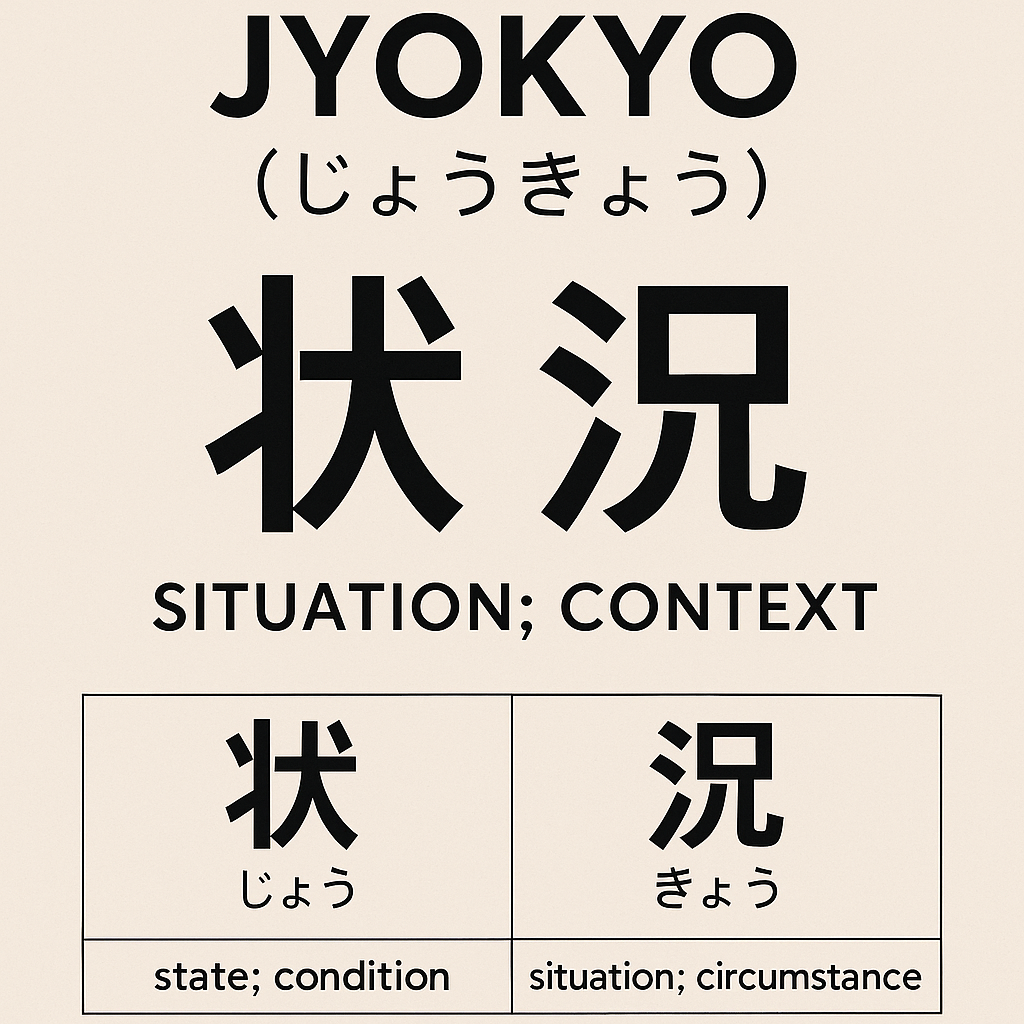
Japanese has many words that show how people think and communicate. One of these is 状況 (じょうきょう / jyokyo), which means “situation” or “state of things.” It’s a common word that helps describe what is happening around you and how people should react. This guide explains the meaning of jyokyo, how to use it, and why it’s important in Japanese culture.
1. What Does “Jyokyo” Mean?
状況 (jyokyo) means situation or circumstances. It talks about what is happening at a certain time.
Example:
- 今の状況はどうですか?
Ima no jyokyo wa dou desu ka?
“How is the current situation?”
Key ideas:
- Shows both facts and feelings.
- Used in daily life, work, and news.
- Helps people understand context before acting or speaking.
2. Kanji and Pronunciation
| Kanji | Reading | Meaning |
|---|---|---|
| 状 | じょう (jou) | State, condition |
| 況 | きょう (kyou) | Situation, circumstance |
Pronunciation: じょうきょう (joukyou)
Level: JLPT N3 (intermediate learners)
Variant: 情況 (less common form)
Together, these kanji show the idea of “the surrounding situation.”
3. Common Meanings and Uses
| Japanese | English | Common Use |
|---|---|---|
| 現在の状況 | current situation | neutral, general |
| 経済状況 | economic situation | business/news |
| 進行状況 | progress status | work, projects |
| 交通状況 | traffic situation | daily life |
Tip: Jyokyo often means something that can change, not something fixed.
4. Useful Expressions with Jyokyo
| Phrase | English Meaning | Where to Use |
|---|---|---|
| 状況によって | depending on the situation | planning or deciding |
| 状況を把握する | to understand the situation | work or reports |
| 厳しい状況 | a hard situation | problems or stress |
| 複雑な状況 | a complicated situation | explanations |
| 状況が変わる | the situation changes | everyday talk |
| 状況を改善する | to improve the situation | business, problem-solving |
These are easy and natural ways to use jyokyo in speech or writing.
5. Example Sentences
- 現在の政治状況は不安定です。
The current political situation is unstable. - この状況をどう乗り越えるかが大切です。
How we handle this situation is important. - 状況が落ち着いたら連絡します。
I’ll contact you when things calm down. - 状況を見て決めましょう。
Let’s decide after we see the situation. - この状況では成功は難しいです。
In this situation, success is difficult.
6. Difference Between Similar Words
| Word | Meaning | Example | Use |
|---|---|---|---|
| 状況 (jyokyo) | situation, what’s happening | 経済状況 | changes often |
| 状態 (joutai) | condition, state | 健康状態 | fixed or physical things |
| 事情 (jijou) | reason, background | 家庭の事情 | personal or social reasons |
Remember:
- Jyokyo = what is happening
- Joutai = how something is
- Jijou = why it is happening
7. Reading the Situation in Japan
In Japan, people often talk about 空気を読む (kuuki o yomu) — “reading the air.” It means noticing the jyokyo or feeling of the moment before acting or speaking.
Examples:
- Speaking politely to your boss, but casually with friends.
- Waiting for the right time to share bad news.
- Changing tone if a meeting feels tense.
Understanding jyokyo shows good manners and social awareness.
8. Formal and Casual Use
| Setting | Example | Meaning |
|---|---|---|
| Work | 状況報告 / 状況を共有する | give or share a report |
| News | 経済状況 / 災害状況 | describe the economy or disasters |
| Everyday | どんな状況? / 今の状況じゃ無理 | what’s going on? / it’s impossible now |
Jyokyo works well in both serious and casual talks.
9. Common Compound Words
| Term | English | Use |
|---|---|---|
| 危機的状況 | critical situation | emergency, danger |
| 社会状況 | social situation | news, society |
| 利用状況 | usage status | apps, statistics |
| 市場状況 | market situation | economy |
| 現場の状況 | on-site situation | workplaces, events |
These combinations make speech and writing sound natural.
10. Easy Tips for Learners
- Use の with jyokyo:
- 今の状況 (current situation)
- 世界の状況 (world situation)
- Common verbs:
- 把握する (understand)
- 分析する (analyze)
- 変わる (change)
- Practice saying sentences about your life:
- 今の生活状況は大変です。 (My current life situation is tough.)
- Listen to how it’s used in TV shows, news, and meetings.
- Don’t confuse with 上京 (jōkyō) — “going to Tokyo,” a different word!
11. Why Jyokyo Is Important
Jyokyo shows how Japanese people think about the world — with attention and care. It’s not only about facts, but also about the mood and timing. It teaches patience, empathy, and good judgment.
Cultural Notes:
- Western speech is often direct.
- Japanese speech values harmony and context.
- Knowing the jyokyo helps avoid misunderstanding.
12. Conclusion
Jyokyo (状況) means more than “situation.” It’s a way to see and understand what is happening around you. By learning this word, you also learn how to think more carefully about context, timing, and others’ feelings.
To know the jyokyo is to understand not just what is happening — but how to act wisely within it.