Managing software licenses has become difficult for many organizations. Companies and government agencies now use hundreds or even thousands of software tools. These tools are often paid for using monthly or yearly licenses. Over time, many licenses are forgotten, unused, or mismanaged. This leads to wasted money and possible legal problems.
The idea of a Doge Software Licenses Audit HUD was created to solve this problem. It focuses on showing clear, real-time information about software licenses using a simple dashboard. This helps organizations understand what software they own, how it is used, and where money or risks are being wasted.
This article explains the Doge Software Licenses Audit HUD in very simple language. It covers what it is, why it matters, how it works, its benefits, challenges, and future direction Instablu
What Is a Doge Software Licenses Audit HUD
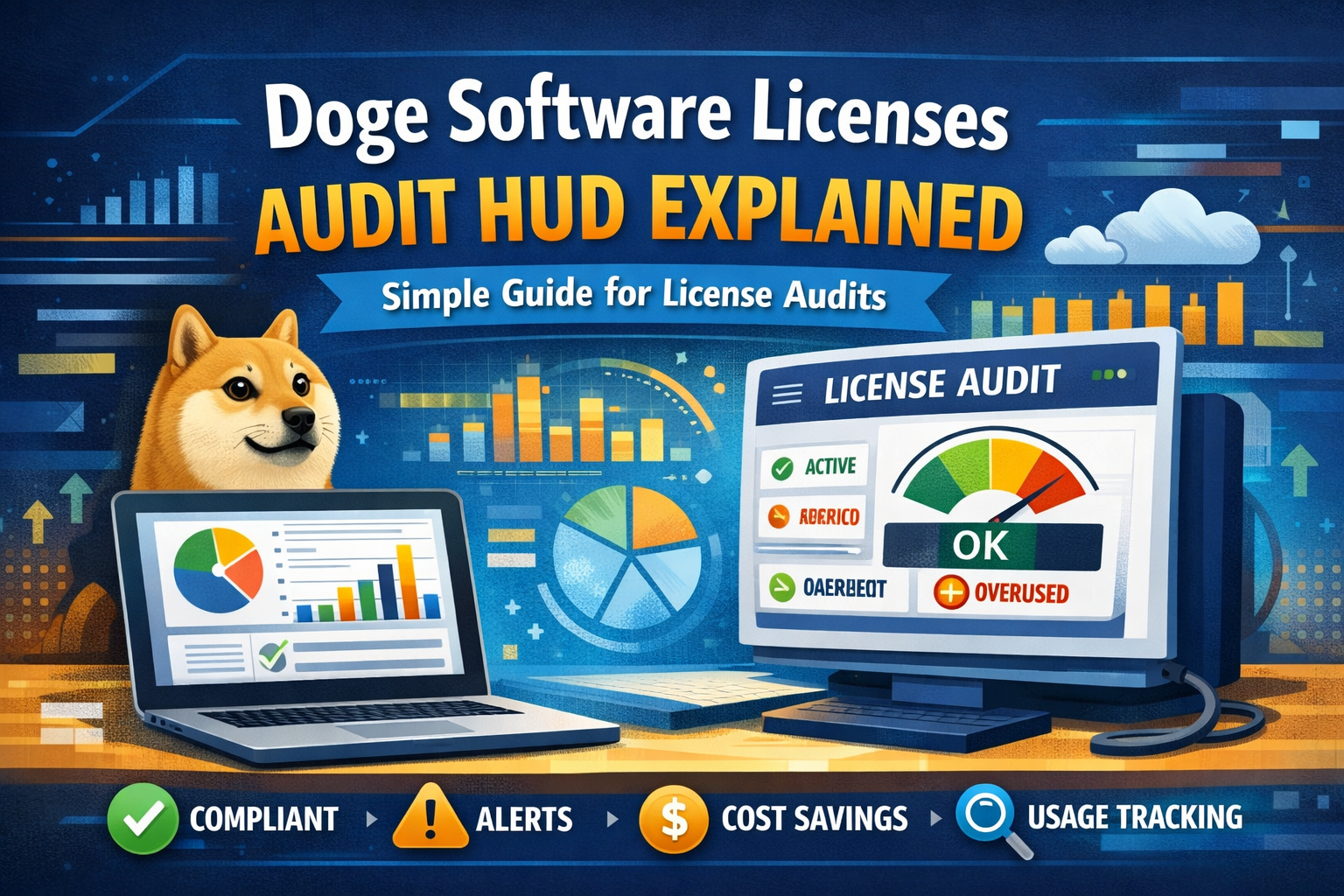
A Doge Software Licenses Audit HUD is a system that tracks software licenses and shows the data on a dashboard. The word HUD means “Heads-Up Display.” It is similar to a car dashboard where you can see speed, fuel, and warnings at a glance.
In software licensing, the HUD shows important information such as:
-
How many licenses were bought
-
How many licenses are actually used
-
Which licenses are unused or expired
-
Where compliance risks may exist
The word Doge in this context does not mean a product or brand. It represents a modern and simple way of auditing software licenses using automation and clear data.
Why Software License Auditing Is Important
Software licenses cost a lot of money. When licenses are not tracked properly, organizations lose money and may face penalties.
Common Problems Without License Auditing
Many organizations face the same issues:
-
Paying for licenses that nobody uses
-
Employees leaving but licenses staying active
-
Buying more licenses than needed
-
Not knowing when licenses expire
-
Failing vendor audits
These problems happen because software usage is often spread across many teams, systems, and locations.
Why Audits Are No Longer Optional
In the past, software audits were done once a year. Today, that is not enough. Software usage changes daily. Cloud tools and subscriptions make tracking harder. Vendors also perform audits more often.
A Doge Software Licenses Audit HUD helps by making license auditing a daily and automatic process.
Understanding the Key Parts of the Audit HUD
To understand how the system works, it helps to break it into simple parts.
What “Audit” Means Here
An audit means checking if software usage matches what was paid for. It answers questions like:
-
Are we using more licenses than we bought
-
Are we paying for licenses we do not use
-
Are we following license rules
What “HUD” Means
The HUD is the dashboard that shows audit results. It uses charts, numbers, and alerts to make the data easy to understand.
What Makes It “Doge-Style”
The Doge approach focuses on:
-
Automation instead of manual work
-
Real-time updates instead of old reports
-
Simple visuals instead of long spreadsheets
-
Continuous monitoring instead of one-time audits
Main Features of a Doge Software Licenses Audit HUD
A good Audit HUD includes several important features.
Real-Time License Tracking
The system constantly checks how software is used. It updates data automatically instead of waiting for monthly reports.
This helps teams see problems early.
Central Dashboard
All license data is shown in one place. Different teams can access the same information without confusion.
Automated Software Discovery
The system scans devices, servers, and cloud tools to find installed software. This removes the need for manual checks.
Alerts and Warnings
The HUD sends alerts when:
-
Licenses are overused
-
Licenses are about to expire
-
Compliance risks appear
Reporting Tools
The system creates reports that can be shared with management, auditors, or vendors.
Common Metrics Shown in the Dashboard
Below is a table showing typical data found in a Doge Software Licenses Audit HUD.
| Metric Type | Example Data | Purpose |
|---|---|---|
| License Count | Total licenses purchased | Shows entitlements |
| Usage Data | Active vs inactive licenses | Finds waste |
| Compliance Status | Overused licenses | Prevents penalties |
| Cost Data | Cost per license | Controls spending |
| Renewal Dates | Upcoming expirations | Avoids surprises |
How a Doge Software Licenses Audit HUD Works Step by Step
The system follows a clear process from data collection to action.
Software Discovery
The system scans all systems to find installed and active software. This includes:
-
Employee computers
-
Servers
-
Cloud platforms
License Data Collection
Purchase records and contracts are added to the system. This shows how many licenses are owned and what rules apply.
Matching Usage With Licenses
The system compares usage data with license limits. This shows gaps, waste, or risks.
Dashboard Display
All data is shown on the HUD using simple visuals like charts and tables.
Alerts and Reports
Warnings are sent when problems appear. Reports are created for audits and reviews.
Action and Optimization
Teams take action by:
-
Removing unused licenses
-
Reassigning licenses
-
Reducing future purchases
Benefits of Using a Doge Software Licenses Audit HUD
Organizations that use this system see many benefits.
Cost Savings
One of the biggest benefits is saving money.
-
Unused licenses are removed
-
Duplicate tools are identified
-
Spending becomes more accurate
Better Compliance
Continuous monitoring helps avoid license violations and penalties.
Less Manual Work
Automation reduces time spent on spreadsheets and emails.
Better Decision Making
Leaders can see real data before approving renewals or purchases.
Stronger Governance
Clear ownership and rules improve accountability.
Real-World Use Case Example
Large organizations often have thousands of software licenses. Without a dashboard, nobody knows the full picture.
Common findings include:
-
Licenses assigned to former employees
-
Software installed but never used
-
Multiple tools doing the same job
With an Audit HUD, these issues become visible immediately. This allows teams to fix problems quickly.
Best Practices for Successful Implementation
Using the system correctly is just as important as having it.
Start With a Full Inventory
Make sure all software and licenses are included from the beginning.
Involve the Right Teams
Successful license management needs help from:
-
IT teams
-
Procurement teams
-
Finance teams
-
Legal teams
Set Clear Rules
Create clear policies for:
-
Requesting software
-
Assigning licenses
-
Removing unused licenses
Keep Data Clean
Regularly review data to avoid errors or outdated information.
Use Data for Planning
Use insights from the HUD to plan budgets and renewals.
Common Challenges and How to Handle Them
Even good systems have challenges.
Misunderstanding “Unused” Licenses
Some licenses may be unused on purpose for future needs.
Solution: Combine dashboard data with business context.
Complex License Rules
Each vendor has different license rules.
Solution: Document rules clearly inside the system.
Integration Issues
Connecting many tools can be difficult.
Solution: Start with the most important software first.
Team Resistance
Some teams may fear increased visibility.
Solution: Explain that the goal is efficiency, not blame.
Traditional License Audits vs Audit HUD Approach
The table below shows the difference.
| Area | Traditional Audits | Audit HUD |
|---|---|---|
| Frequency | Yearly or quarterly | Continuous |
| Effort | Manual | Automated |
| Visibility | After problems | Before problems |
| Risk Control | Reactive | Proactive |
| Speed | Slow | Fast |
Future of Doge Software Licenses Audit HUD
Technology continues to improve these systems.
Use of Artificial Intelligence
AI can predict future license needs and risks.
Automatic License Cleanup
Unused Doge Software Licenses Audit HUD may be removed automatically.
Better Financial Integration
License data can connect directly to budgeting tools.
Wider Coverage
Future systems may include open-source and usage-based lDoge Software Licenses Audit HUD.
Why This System Is More Than Just Compliance
While audits are important, the real value is better control and planning.
Benefits include:
-
Smarter IT spending
-
Better trust with leadership
-
Clear proof of accountability
-
Support for digital transformation
License management becomes a strategic tool instead of a burden.
FAQs
What is Doge Software Licenses Audit HUD?
Doge Software Licenses Audit HUD is a system that tracks software licenses and shows the data on a real-time dashboard. It helps organizations see how many licenses they own, how many are used, and where waste or risks exist.
Why is Doge Software Licenses Audit HUD important?
It is important because many organizations pay for software licenses they do not use. This system helps reduce waste, avoid license violations, and improve cost control by showing clear and updated data.
How does Doge Software Licenses Audit HUD work?
The system scans software usage across devices and platforms. It then matches this usage with purchased licenses and displays the results on a dashboard. Alerts are sent when issues like overuse or expiration are found.
Conclusion
A Doge Software Licenses Audit HUD offers a simple and effective way to manage software Doge Software Licenses Audit HUD. By using real-time data, automation, and clear dashboards, organizations can reduce waste, avoid risks, and make better decisions, instead of waiting for audits to reveal problems, this approach helps organizations stay in control every day. For any organization that wants transparency, cost control, and compliance, adopting this system is a smart step forward.