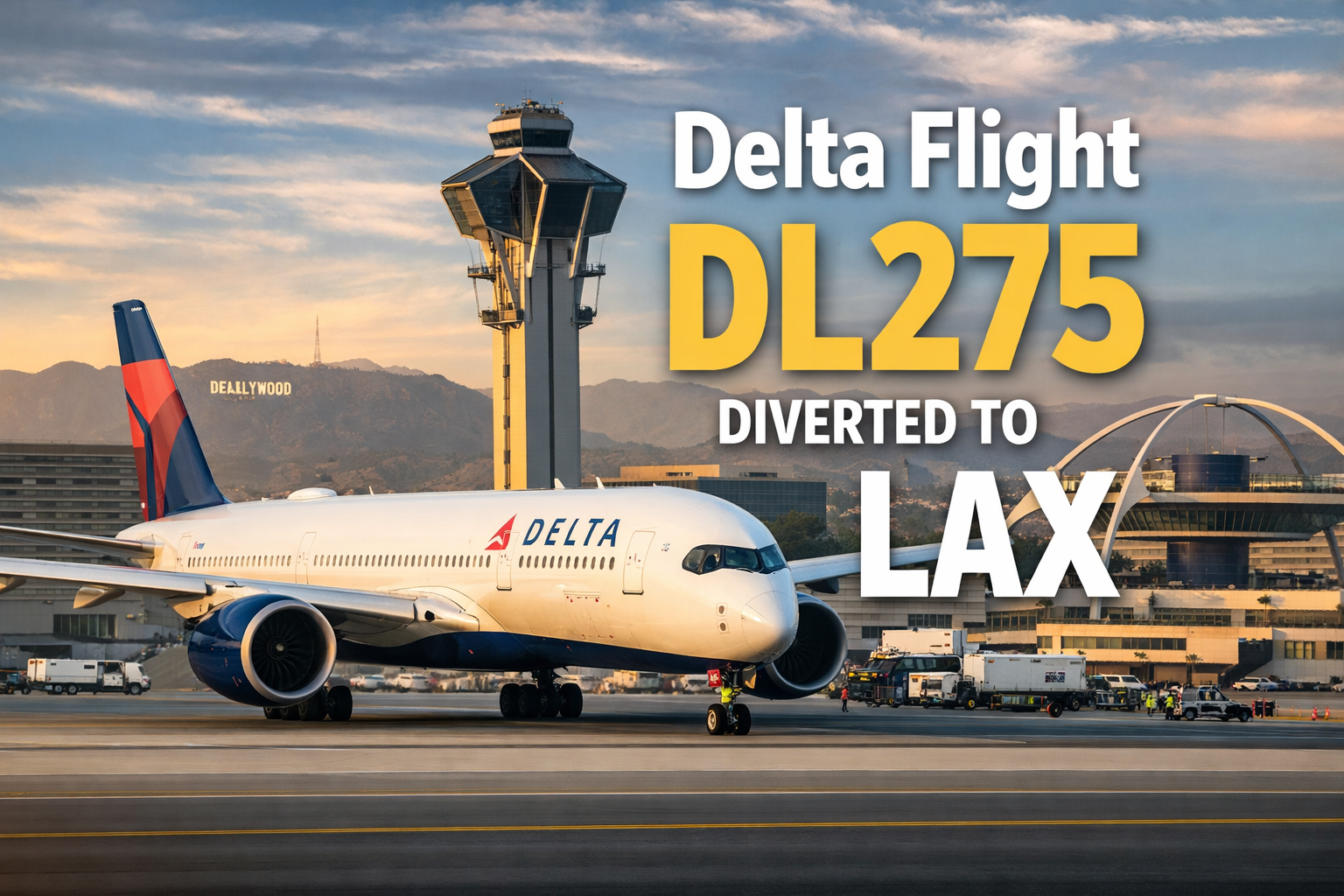
delta flight dl275 diverted lax was on a long international journey when it was forced to change course and land at Los Angeles International Airport (LAX). The flight was not scheduled to stop in Los Angeles, but the crew decided to divert the aircraft as a safety measure Woolrec
The diversion was handled calmly and safely. The aircraft landed without any injuries or damage. Passengers were taken care of after landing. While the situation caused delays and confusion for travelers, it followed standard airline safety rules.
Basic Flight Information Delta Flight DL275 Diverted LAX
Before looking at the diversion, it helps to understand the flight itself.
Flight Details
| Item | Information |
|---|---|
| Airline | Delta Air Lines |
| Flight Number | DL275 |
| Aircraft Type | Airbus A350-900 |
| Usual Route | Detroit (DTW) to Tokyo Haneda (HND) |
| Flight Type | Long international flight |
| Engines | Rolls-Royce Trent XWB |
| Diversion Airport | Los Angeles International Airport (LAX) |
The Airbus A350-900 is a modern and advanced aircraft. It is designed for long flights across oceans and is known for strong safety systems and fuel efficiency.
Timeline of Events Delta Flight DL275 Diverted LAX
The events of the diversion followed a normal and careful process used by pilots around the world.
Step-by-Step Timeline
-
Departure from Detroit
Delta Flight DL275 Diverted LAX took off from Detroit as planned. -
Cruising Over the Pacific Region
The aircraft reached cruising altitude and was flying normally. -
System Alert Appears
During the flight, the pilots received a system alert related to one of the aircraft systems. -
Crew Reviews the Situation
Pilots followed checklists and reviewed system data. They stayed in contact with airline support teams. -
Decision to Divert
The crew decided not to continue the long ocean crossing and chose to divert. -
LAX Chosen as Alternate Airport
Los Angeles was selected as the best airport to land safely. -
Safe Landing at LAX
The aircraft landed safely and taxied to the gate.
This timeline shows how flight crews act early when something does not look right.
Reason for the Diversion
What Caused the Diversion
Reports say the diversion happened because of a possible issue with the engine anti-ice system. This system helps prevent ice from forming on engine parts during flight, ice buildup can affect how engines work, especially at high altitudes where temperatures are very low.
Why the Anti-Ice System Is Important
The anti-ice system helps by:
-
Keeping engine air intakes clear
-
Protecting sensors from freezing
-
Making sure air flows smoothly into the engine
-
Supporting stable engine performance
Even if the aircraft can still fly safely, pilots are trained to avoid risk. That is why the crew chose to land early.
Was Delta Flight DL275 Diverted LAX Emergency?
No, the diversion was not an emergency.
There is an important difference:
| Precautionary Diversion | Emergency Diversion |
|---|---|
| No immediate danger | Immediate danger |
| Aircraft works normally | Aircraft may lose function |
| Planned and calm | Urgent response |
| Extra safety step | Required action |
This was a precaution taken to keep everyone safe.
Why Los Angeles (LAX) Was Chosen
Choosing where to divert a large aircraft is not simple. Pilots must think about safety, support, and passenger care.
Reasons LAX Was the Best Choice
Los Angeles International Airport offered:
-
Long runways for large aircraft
-
Maintenance support for Airbus A350
-
Delta staff and ground teams
-
Customs and immigration services
-
Hotels and transport for passengers
-
Good weather conditions
Comparison With Other Airports
| Airport | Advantage | Limitation |
|---|---|---|
| Anchorage | Close to flight path | Limited A350 support |
| Seattle | Delta presence | Busy airport |
| San Francisco | Large airport | Weather delays |
| Los Angeles | Full support | Longer distance |
LAX provided the best overall solution.
What Happened After Landing
Once the aircraft landed, the focus moved from flying to safety checks and passenger support.
Aircraft Inspection and Maintenance
After landing:
-
The aircraft was removed from service
-
Engineers inspected engine systems
-
Data from onboard systems was reviewed
-
Maintenance teams checked the anti-ice system
-
The aircraft was cleared only after full checks
This process is normal and required by safety rules.
Why Inspections Take Time
| Reason | Explanation |
|---|---|
| Safety rules | Must be followed fully |
| Parts checks | Some parts take time |
| Data review | Engineers analyze system data |
| Approval | Aircraft must be signed off |
Aircraft are never rushed back into service.
Passenger Experience
For passengers, the diversion changed travel plans and caused delays.
What Passengers Experienced
-
Announcement from the flight crew
-
Longer flight time
-
Landing at an unexpected airport
-
Disembarking in Los Angeles
Passengers were kept informed during the process.
Passenger Support After Landing
Airlines usually provide:
-
Rebooking on new flights
-
Hotel stays for overnight delays
-
Meals or vouchers
-
Help with customs and immigration
Delta has strong operations at LAX, which helped speed up support.
Airline Communication
Airlines keep communication clear but simple during such events.
What Airlines Usually Say
Most airline statements include:
-
Safety was the top priority
-
The diversion was precautionary
-
Passengers were supported
-
The aircraft was inspected
Airlines avoid guessing causes before inspections are finished.
Flight Tracking Information
Flight tracking services showed:
-
The change in flight path
-
Landing at LAX
-
Aircraft identification
However, flight trackers do not explain why a diversion happens. That information comes from airline or media reports.
How Common Are Flight Diversions?
Diversions may feel rare to passengers, but they happen more often than people think.
General Aviation Numbers
| Item | Approximate Data |
|---|---|
| Flights per day worldwide | 100,000+ |
| Flights diverted | Less than 1% |
| Long-haul diversions | Very rare |
This shows that diversions like DL275 are unusual but expected in aviation.
Common Reasons for Diversions
-
Mechanical alerts
-
Medical emergencies
-
Severe weather
-
Airport closures
-
Security concerns
Mechanical alerts are one of the most common reasons.
Role of Modern Aircraft Technology
Modern aircraft are full of sensors and computers.
How Aircraft Monitor Problems
Aircraft systems track:
-
Temperature
-
Pressure
-
Vibration
-
Airflow
These systems help crews spot problems early.
Predictive Maintenance Explained Simply
Predictive maintenance means:
-
Watching system data
-
Finding small changes early
-
Fixing problems before they grow
This helps prevent serious issues during flight.
Safety Culture in Aviation
The DL275 diversion shows how aviation safety works.
Key Safety Practices
-
Early decision-making
-
Clear procedures
-
Conservative choices
-
Passenger safety first
-
Full inspections
Airlines prefer delays over risk.
What Passengers Can Learn
Diversions can feel scary, but they are usually a sign that safety systems are working.
Key Passenger Takeaways
-
Diversions are planned safety actions
-
Pilots are highly trained
-
Aircraft have many backup systems
-
Safety always comes before schedules
Understanding this can reduce worry.
What Airlines Learn From Events Like This
Every diversion helps airlines improve.
Industry Lessons
-
Better system monitoring
-
Improved communication
-
Smarter maintenance planning
-
Stronger passenger care plans
Each event improves future safety.
FAQs
Why was Delta Flight DL275 Diverted LAX diverted to LAX?
Delta Flight DL275 Diverted LAX diverted to LAX as a safety precaution after the flight crew noticed a possible technical issue during the flight. The pilots decided to land at a suitable airport instead of continuing the long journey.
What was the reason Delta Flight DL275 Diverted LAX diverted LAX?
Reports indicate the diversion was related to a possible engine anti-ice system issue. This system helps prevent ice buildup at high altitudes, and any irregular reading requires careful action.
Was Delta Flight DL275 Diverted LAXan emergency landing?
No, Delta Flight DL275 Diverted LAX Diverted LAX was not an emergency landing. The diversion was precautionary, meaning the aircraft was flying normally, but the crew chose safety over continuing the flight.
Why did Delta choose Los Angeles Airport for the diversion?
Los Angeles International Airport was chosen because it has long runways, full maintenance support for large aircraft, and strong Delta ground operations. It is well equipped to handle international passengers.
Did Delta Flight DL275 Diverted LAX Diverted LAX land safely at LAX?
Yes, Delta Flight DL275 Diverted LAX landed safely at LAX. There were no injuries reported, and the landing was smooth and controlled.
What aircraft was operating Delta Flight DL275 Diverted LAX?
Delta Flight DL275 Diverted LAXwas operated using an Airbus A350-900 aircraft, which is commonly used for long international flights.
Were passengers affected by the diversion?
Yes, passengers experienced delays and had to land at an unexpected airport. However, Delta provided rebooking, accommodation, and assistance after landing.
Did Delta provide support to passengers after the diversion?
Yes, Delta arranged support for passengers, including rebooking on later flights, hotel stays if needed, and help with meals and travel arrangements.
Is it common for long international flights to divert?
Flight diversions are rare, especially on long international routes. However, when they happen, they are usually done to maintain the highest safety standards.
Conclusion
Delta Flight DL275 Diverted LAX diversion to Los Angeles was handled exactly as aviation rules require. When the crew noticed a possible system issue, they chose caution and safety. The aircraft landed safely, passengers were supported, and the plane was inspected before returning to service, while diversions are inconvenient, they show that modern aviation puts safety above all else. Events like this remind travelers that airline systems, crews, and procedures are designed to protect everyone on board.