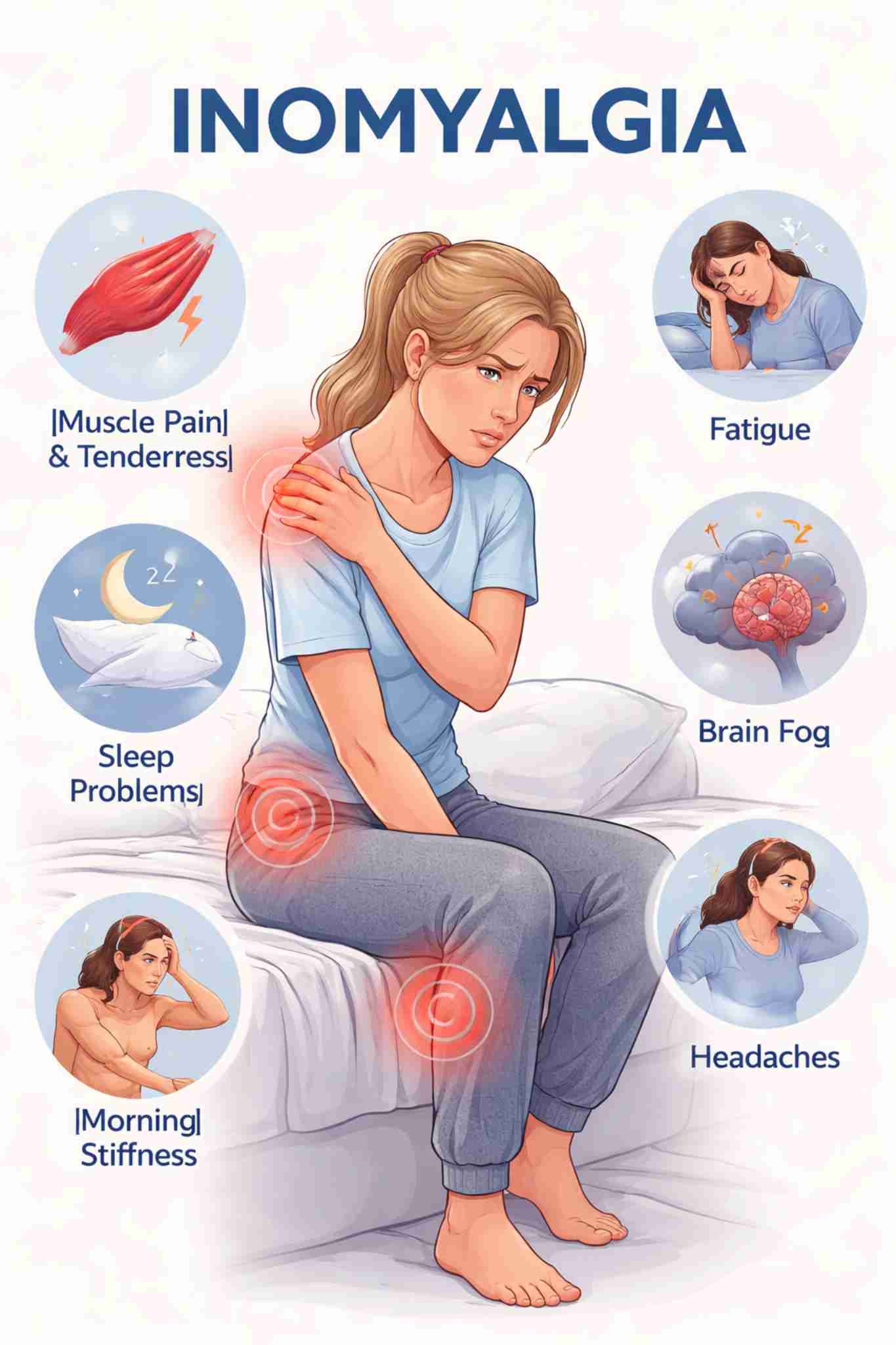
Many people live with muscle pain that does not go away. The pain may last for months or even years. Some people call this kind of long-term muscle pain inomyalgia. While this word is not a common medical term, it is often used online to describe ongoing muscle pain, stiffness, and tiredness. These symptoms can affect daily life, work, and mood.
This article explains inomyalgia in clear and simple words. You will learn about the symptoms, possible causes, how doctors check for it, and what you can do to manage the pain.
What Is Inomyalgia?
Inomyalgia is a word people use to describe long-lasting muscle pain. It is not an official medical diagnosis. Doctors usually use other names like:
-
Fibromyalgia
-
Chronic muscle pain
-
Myofascial pain
Even if the name is different, the pain and tiredness people feel are real.
What People Mean by Inomyalgia
People often use the word inomyalgia when they have:
-
Muscle pain that lasts a long time
-
Sore or tender muscles
-
Pain with no clear injury
-
Pain that comes and goes
-
Tiredness and poor sleep
Common Symptoms
People with inomyalgia may have more than just pain. The symptoms can affect the whole body.
Main Physical Symptoms
-
Muscle pain or aching
-
Muscle stiffness, especially in the morning
-
Sore or tender spots
-
Headaches
-
Pain that gets worse after activity
Other Common Symptoms
-
Feeling very tired
-
Poor sleep or waking up tired
-
Trouble thinking clearly (“brain fog”)
-
Low energy
-
Feeling sensitive to touch, cold, or heat
Symptoms Table
| Type of Problem | Common Symptoms |
|---|---|
| Pain | Muscle aches, sore spots, stiffness |
| Energy | Tired all the time |
| Sleep | Poor sleep, not feeling rested |
| Thinking | Trouble focusing, forgetfulness |
| Sensitivity | Pain from light touch or pressure |
Possible Causes
There is usually no single cause for long-lasting muscle pain. It often happens because of several things working together.
Common Causes and Triggers
-
Stress
-
Poor sleep
-
Too much physical work
-
Sitting too long
-
Bad posture
-
Illness or injury in the past
Read also: RADV Audit Defense Strategy
How These Causes Affect the Body
| Cause | What It Does |
|---|---|
| Stress | Makes muscles tight and painful |
| Poor sleep | Makes pain feel worse |
| Overuse | Tires muscles and causes soreness |
| Long sitting | Stiffens muscles |
| Past illness | Can leave the body more sensitive |
| Poor posture | Puts strain on muscles |
Risk Factors
Some people are more likely to have long-term muscle pain.
Common risk factors include:
-
Living with a lot of stress
-
Not moving much
-
Working long hours at a desk
-
Not sleeping well
-
Anxiety or low mood
-
Past injuries
How Doctors Check for the Problem
There is no special test for inomyalgia. Doctors try to find out if another condition is causing the pain.
What Doctors Usually Do
-
Ask about your symptoms
-
Ask how long you have had pain
-
Do a physical check
-
Run blood tests to rule out other problems
-
Check for other pain conditions
Conditions Doctors May Check For
| Condition | Main Signs |
|---|---|
| Fibromyalgia | Widespread pain, tiredness |
| Joint problems | Swelling, joint pain |
| Muscle disease | Weak muscles |
| Nerve pain | Burning or tingling pain |
| Vitamin problems | Low energy, weakness |
How Inomyalgia Is Managed
There is no quick cure, but many people feel better with the right care. The best results usually come from using more than one method.
Helpful Non-Drug Methods
-
Gentle exercise (walking, swimming)
-
Stretching
-
Light yoga
-
Physical therapy
-
Relaxation and breathing exercises
Medicines (Doctor Advice Needed)
-
Some pain-relief medicines
-
Medicines to help with sleep
-
Medicines that help calm pain signals
⚠️ Always talk to a doctor before using medicine for long-term pain.
Self-Care at Home
-
Use warm packs on sore muscles
-
Take warm showers
-
Rest when needed
-
Improve your work setup (chair, desk)
-
Drink enough water
Treatment Options Table
| Method | Example | How It Helps |
|---|---|---|
| Exercise | Walking | Keeps muscles loose |
| Heat | Heating pad | Relaxes muscles |
| Therapy | Physical therapy | Improves movement |
| Sleep routine | Fixed bedtime | Reduces tiredness |
| Relaxation | Deep breathing | Lowers stress |
Inomyalgia vs Other Pain Problems
People often wonder how inomyalgia is different from other conditions.
| Feature | Inomyalgia (Informal Name) | Fibromyalgia | Myofascial Pain |
|---|---|---|---|
| Official diagnosis | No | Yes | Yes |
| Pain area | Muscles | Whole body | Small areas |
| Tiredness | Common | Very common | Sometimes |
| Brain fog | Sometimes | Common | Rare |
| Tender spots | Yes | Yes | Yes |
Long-Term Outlook
Long-lasting muscle pain may not go away fully, but many people learn to live well with it.
What Helps in the Long Run
-
Moving a little every day
-
Not doing too much at once
-
Getting enough rest
-
Learning what triggers your pain
-
Asking for support when needed
Progress may be slow, but small daily steps can make a big difference over time.
How to Reduce Flare-Ups
Flare-ups are times when pain gets worse. You can often lower how often this happens.
Simple Tips
-
Do not push your body too hard
-
Take breaks during work
-
Stretch often
-
Keep a steady sleep time
-
Warm up before activity
-
Try to manage stress
Gaps in Knowledge
Doctors and researchers are still learning about long-term muscle pain.
Some challenges include:
-
No clear test for inomyalgia
-
Overlap with other pain problems
-
Different people have different symptoms
-
More research is still needed
Simple FAQ
| Question | Simple Answer |
|---|---|
| Is inomyalgia a real illness? | The pain is real, but the name is not official. |
| Can it be cured? | There is no full cure, but symptoms can be managed. |
| Is it the same as fibromyalgia? | They are similar, but not exactly the same. |
| What helps most people? | Gentle exercise, better sleep, less stress. |
Final Thoughts
Inomyalgia is a word people use for long-lasting muscle pain that can make daily life harder. Even though the name is not official, the pain and tiredness are real and deserve care and understanding. With simple daily habits, gentle movement, good sleep, and support from health workers, many people can reduce their pain and live a more comfortable life.