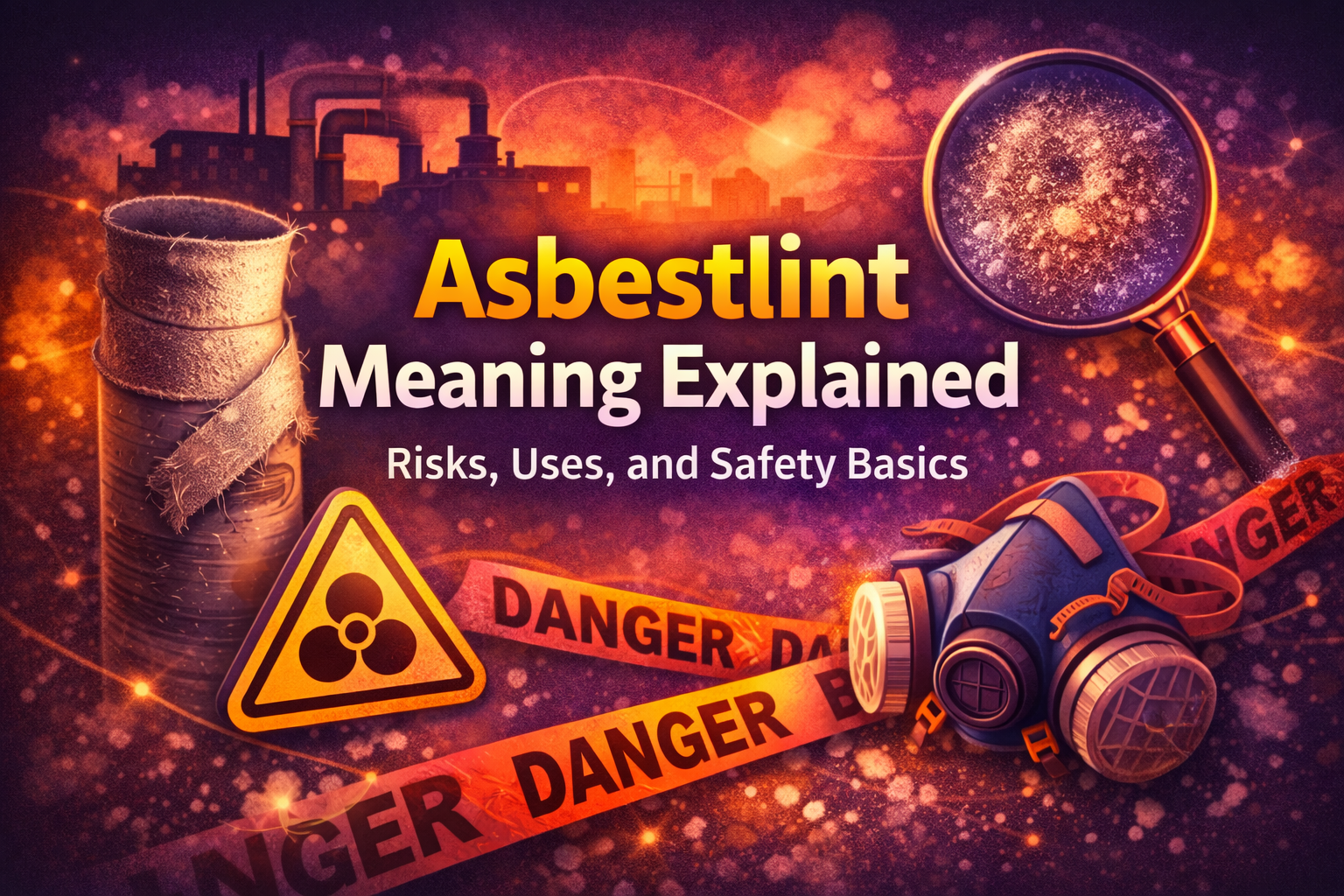
The word asbestlint is found on many websites, but it is not always explained in the same way. Some articles say it means asbestos tape. Other articles say it means fine asbestos dust or fibers that look like lint. Because asbestos is known to be dangerous, this confusion can worry many people.
This article explains what asbestlint usually means, where it can be found, why it can be harmful, and what people should do if they think it is present. Everything is written in simple English so it is easy to understand Beliktal
What Asbestlint Means
How the word is used online
Asbestlint is not an official medical or scientific term. It is an informal word used mostly in online articles. In most cases, it is used in two main ways. The first meaning is asbestos tape or strip. This was a fabric-like tape made using asbestos fibers. It was used in the past for sealing, wrapping, and heat protection, the second meaning is lint-like asbestos dust or fibers. In this case, the word “lint” describes very small fibers that come from damaged asbestos materials, both meanings are related to asbestos and both can be unsafe.
Why the meaning changes
The meaning changes because:
-
The word is informal
-
It mixes two descriptive words
-
Different writers explain it differently
-
Some meanings come from translations
Because of this, it is important to read carefully and understand the context.
Where the Word Asbestlint Comes From
Some sources say the word comes from older European language use, especially from Dutch or German-style words. These languages often combine material names with descriptive terms.
In this way:
-
“Asbest” refers to asbestos
-
“Lint” refers to strip, tape, or fibers
Over time, the word started appearing in English articles even though it is not commonly used in official safety guides.
Where Asbestlint May Be Found
Older buildings
Asbestlint is mostly connected to older buildings, especially ones built before asbestos was restricted or banned.
Common places include:
-
Basements
-
Boiler rooms
-
Heating system areas
-
Mechanical rooms
-
Old industrial buildings
When it is asbestos tape
When asbestlint means asbestos tape, it was often used:
-
Around pipes
-
On pipe joints
-
Near boilers and furnaces
-
In areas with high heat
The tape usually looks cloth-like and may appear white, gray, or off-white.
When it is asbestos dust or fibers
When asbestlint means lint-like fibers, it usually comes from:
-
Old insulation
-
Damaged pipe covering
-
Broken asbestos materials
-
Crumbling fireproof layers
These fibers are very small and may float in the air.
Why Asbestlint Can Be Dangerous
How exposure happens
Asbestos is most dangerous when fibers become airborne and are breathed in. Asbestlint can release fibers when it is:
-
Cut
-
Torn
-
Broken
-
Disturbed
-
Worn down over time
Once in the air, fibers can stay there for a long time.
Health concerns linked to asbestos
Breathing in asbestos fibers can cause serious health problems. Risk depends on:
-
How much exposure happens
-
How often exposure happens
-
The condition of the material
Even small fibers can be harmful if exposure continues over time.
How Asbestlint Can Spread Indoors
Movement through air
Lint-like asbestos fibers can move through:
-
Air currents
-
Open doors and spaces
-
Ventilation systems
This means asbestos disturbed in one area may spread to others.
Why cleaning is difficult
Asbestos fibers are:
-
Very small
-
Light in weight
-
Able to stick to surfaces
Regular cleaning tools can spread fibers instead of removing them.
How People Notice Possible Asbestlint
Signs people report
Some common signs mentioned include:
-
Old tape that looks woven or fibrous
-
Material that breaks into threads
-
Powder-like dust near insulation
-
Crumbling material in older buildings
Important warning
You cannot confirm asbestos by looking at it. Many safe materials look similar.
Only professional testing can confirm asbestos.
What To Do If You Think Asbestlint Is Present
Basic safety steps
General safety advice often includes:
-
Do not touch the material
-
Do not disturb it
-
Keep people away from the area
-
Avoid making dust
Why professionals are needed
Asbestos handling requires:
-
Special training
-
Protective equipment
-
Controlled work areas
Professionals know how to reduce exposure risk.
Removal and Disposal Overview
Why removal is risky
Removing asbestos without training can:
-
Release fibers
-
Spread contamination
-
Increase health risk
Because of this, removal is often controlled by laws.
General professional process
At a high level, trained workers usually:
-
Inspect and assess the area
-
Seal off the work space
-
Use protective methods
-
Dispose of materials safely
This helps protect people and the environment.
Difference Between Tape and Dust Meanings
Key differences explained
The table below shows the main differences between the two meanings.
| Feature | Asbestos Tape | Asbestos Dust or Fibers |
|---|---|---|
| Appearance | Cloth-like strip | Fine lint-like particles |
| Where found | Wrapped on pipes | From damaged materials |
| Visibility | Easy to see | Hard to see |
| How it spreads | When damaged | Easily airborne |
| Main danger | Fiber release | Breathing fibers |
Understanding this helps reduce confusion.
Common Misunderstandings
Asbestlint is one specific product
This is not true. The word is used for different things.
All tape contains asbestos
Many modern tapes are asbestos-free.
All dust is asbestos
Dust can come from many sources.
You can tell by looking
Visual checks are not reliable.
Asbestlint and Building Age
Why age matters
Asbestos was used because it:
-
Resisted heat
-
Was strong
-
Was affordable
Older buildings are more likely to contain it.
Modern buildings
Newer buildings usually use safer materials. However, older materials may still be hidden behind walls or coverings.
Safer Materials Used Today
Modern alternatives
Today, safer materials include:
-
Fiberglass
-
Mineral wool
-
Synthetic heat-resistant tape
-
Ceramic fiber products
Why they are safer
Modern materials are:
-
Regulated
-
Tested for safety
-
Designed not to release harmful fibers
Why the Term Asbestlint Is Confusing
No standard definition
The word is informal and not regulated.
Translation and description issues
Some uses come from translated or descriptive language.
Repetition online
Many websites repeat information without clarification.
How to Read Information About Asbestlint Carefully
When reading articles, ask:
-
Is it talking about tape or dust?
-
Is it about health risk or history?
-
Is it general information or professional advice?
This helps avoid misunderstanding.
Why Clear Information Is Important
Clear explanations help people:
-
Stay calm
-
Make safe decisions
-
Know when to seek help
Confusion can lead to unsafe actions.
FAQs
What is asbestlint?
Asbestlint is an informal word used to describe asbestos-related material. It usually refers to asbestos tape used in older buildings or lint-like asbestos dust and fibers released from damaged materials.
Is asbestlint an official technical term?
No. Asbestlint is not an official scientific or legal term. It is mainly used in online articles to describe asbestos tape or fine asbestos fibers.
Where is asbestlint commonly found?
Asbestlint may be found in older buildings, especially around pipes, boilers, heating systems, insulation, and other areas exposed to heat.
Conclusion
Asbestlint is a word used to describe asbestos-related materials, often as tape or fine fibers. The word itself is informal, but the health risks linked to asbestos are real. Confusion happens because different websites use the same word in different ways, the safest approach is to focus on avoiding disturbance and seeking professional guidance if asbestos may be present. Clear understanding helps people protect their health and make better decisions, knowing what asbestlint means, where it may appear, and why it can be dangerous is an important step toward safety.