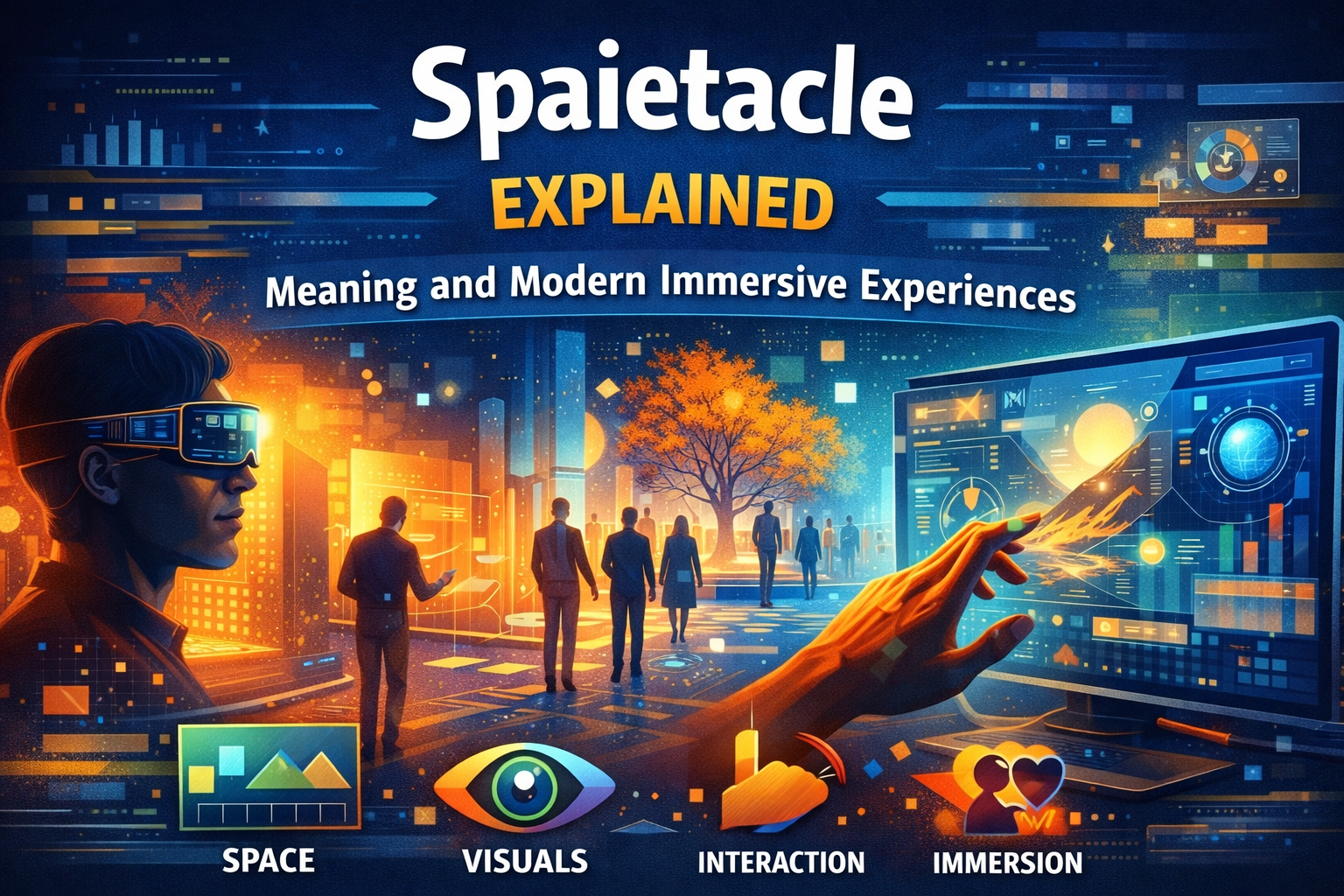
Spaietacle is a modern idea used to describe experiences that mix space, visuals, movement, and interaction. It is about creating environments where people do more than just watch. Instead, people move, explore, react, and feel connected to what they see.
Spaietacle can exist in digital spaces, physical locations, or both at the same time. It is often linked with new technology, but the main goal is simple. The goal is to create experiences that feel real, engaging, and meaningful.
Many people today want more than flat screens or simple displays. They want experiences that involve their senses and emotions. Spaietacle answers this need by placing people inside the experience instead of outside it Courseto
Origin and Meaning of Spaietacle
The word Spaietacle is formed from two ideas:
-
Space
-
Spectacle
Space means the environment where something happens. Spectacle means something that catches attention and creates strong feelings.
Spaietacle brings these two ideas together. It describes an experience that uses space in a powerful and engaging way.
How the Meaning Is Used Today
Spaietacle does not have only one fixed meaning. Different fields use it in slightly different ways.
-
In digital spaces, it may describe interactive environments
-
In physical spaces, it may describe immersive installations
-
In technology, it may describe smart visual systems
Even with these differences, the main idea stays the same. Spaietacle focuses on involvement, interaction, and experience.
Core Concept of Spaietacle
The core idea of Spaietacle is active participation. People are not only observers. They are part of what is happening.
Key Points of the Core Concept
-
People move through space
-
Experiences change based on actions
-
Visuals and sound work together
-
Emotions are an important part
This approach makes experiences more memorable and meaningful.
Key Elements of Spaietacle
Every Spaietacle experience is built using several important elements. These elements work together to create immersion.
Visual Elements
Visuals help people understand and feel the experience.
Common visual elements include:
-
Light and color
-
Shapes and patterns
-
Motion and animation
Visuals guide attention and create mood.
Spatial Design
Space is not empty. It is carefully planned.
Spatial design includes:
-
How people move
-
Where they stop
-
What they see first
Good spatial design helps users feel comfortable and curious.
Interaction
Interaction is what makes Spaietacle different from traditional experiences.
People may interact by:
-
Touching objects
-
Moving their body
-
Making choices
Each action can change what happens next.
Emotional Response
Spaietacle aims to create feelings such as:
-
Interest
-
Wonder
-
Connection
Emotions help people remember experiences longer.
Role of Technology in Spaietacle
Technology often supports Spaietacle, but it is not always the focus. Technology helps experiences react and adapt.
Common Technologies Used
-
Augmented reality
-
Virtual reality
-
Sensors and cameras
-
Smart screens and devices
These tools help systems respond to people in real time.
Technology as a Helper
Technology is used to:
-
Add interactive layers
-
Improve realism
-
Adjust experiences based on actions
The goal is to support the experience, not control it.
Spaietacle in Digital Experiences
Spaietacle is widely used in digital environments where people explore instead of scroll.
Interactive Digital Spaces
Digital spaces may include:
-
Virtual rooms
-
Interactive maps
-
Online exhibitions
People move through content instead of reading it in order.
Story-Based Experiences
Stories can be built as spaces. Users explore scenes and discover parts of the story by moving and interacting.
Benefits of Digital Spaietacle
-
Higher attention
-
Longer engagement
-
Stronger understanding
Spaietacle in Physical Spaces
Spaietacle is also common in real-world locations.
Installations and Exhibits
Physical Spaietacle may appear in:
-
Art installations
-
Public spaces
-
Cultural exhibitions
These spaces use light, sound, and layout to guide people.
Architecture and Environment Design
Buildings and rooms can be designed to shape how people feel.
Design choices include:
-
Ceiling height
-
Path direction
-
Light placement
Digital layers may be added to physical spaces to increase interaction.
Spaietacle and Smart Wearables
Wearable technology can support Spaietacle by adding digital information to daily life.
Smart Glasses and Visual Devices
These devices may show:
-
Visual overlays
-
Directions
-
Information linked to surroundings
They allow people to interact with digital content while moving through real space.
Comfort and Daily Use
Wearables must be light and easy to use. The experience should feel natural and not distracting.
User Experience and Engagement
User experience is central to Spaietacle. The experience should feel smooth and understandable.
How Users Interact
Users may:
-
Walk through environments
-
Look at objects
-
Make simple choices
The system reacts to these actions.
Feedback and Response
Immediate response helps users feel connected.
Examples include:
-
Visual changes
-
Sound effects
-
Movement
Emotional Connection
When users feel involved, the experience becomes more meaningful.
Benefits of Spaietacle-Based Experiences
Spaietacle offers many benefits across different environments.
Main Benefits
-
Stronger attention
-
Better memory
-
Deeper involvement
-
Flexible use
Comparison Table
| Feature | Traditional Experience | Spaieitacle Experience |
|---|---|---|
| User role | Observer | Participant |
| Interaction | Low | High |
| Space use | Limited | Central |
| Emotional impact | Small | Strong |
Challenges and Limitations
Spaieitacle also has challenges that must be considered.
Technical Difficulty
Creating immersive experiences requires planning and skill.
Cost and Resources
Some experiences need special tools and equipment.
User Comfort
Not all users feel comfortable in immersive environments.
Ethical and Social Considerations
As Spaieitacle grows, responsibility becomes important.
Privacy and Data
Some experiences collect user data. It is important to:
-
Protect personal information
-
Be clear about data use
Accessibility
Experiences should be usable by people with different abilities.
Responsible Design
Designers should avoid overload or confusion.
Future Direction of Spaieitacle
Spaieitacle is likely to expand as tools become easier to use.
Possible Future Developments
-
Smarter systems that adapt automatically
-
Lower-cost immersive tools
-
More use in everyday environments
Long-Term Impact
Spaieitacle may change how people interact with spaces, information, and each other.
Real-World Applications of Spaieitacle
Spaieitacle is already used in many areas.
Creative Fields
-
Art
-
Media
-
Interactive installations
Business and Communication
-
Product experiences
-
Interactive spaces
-
Visual presentations
Public and Cultural Spaces
-
Museums
-
Exhibitions
-
Community spaces
Difference Between Spaieitacle and Traditional Experiences
Understanding the difference helps explain its value.
Key Differences Table
| Aspect | Traditional | Spaiietacle |
|---|---|---|
| Structure | Fixed | Exploratory |
| Control | Creator-led | User-driven |
| Interaction | Minimal | Essential |
| Space role | Background | Core element |
Why Spaieitacle Matters Today
Modern life is full of information. Attention is limited. Spaieitacle helps by creating experiences that feel engaging and meaningful.
It supports:
-
Better understanding
-
Stronger connection
-
More memorable experiences
FAQs
What is Spaieitacle?
Spaieitacle is a concept that combines space, visuals, and interaction to create immersive experiences. It allows people to take part in an experience instead of only watching it.
What does the word Spaieitacle mean?
Spaieitacle comes from the ideas of “space” and “spectacle.” It describes experiences designed around space that feel engaging, interactive, and visually strong.
Where is Spaieitacle used?
Spaieitacle is used in digital environments, physical spaces, interactive installations, smart devices, and creative experiences where user involvement is important.
How is Spaieitacle different from traditional experiences?
Traditional experiences are mostly passive. Spaieitacle allows people to move, interact, and explore, making the experience more engaging and memorable.
Does Spaieitacle require advanced technology?
Not always. While technology often supports Spaieitacle, the main focus is on space and interaction. Some experiences use simple design without complex tools.
Conclusion
Spaie tacle is a modern way of creating experiences that place people at the center. By combining space, visuals, interaction, and technology, it moves beyond simple observation, whether used in digital environments, physical spaces, or wearable systems, Spaieitacle focuses on participation and engagement. As tools and ideas continue to grow, this concept is likely to shape how people experience the world around them.