Gaming is no longer only about playing for fun. Many players want to get better, test their skills, and push themselves. This is where the idea of a Gamer Challenger becomes important.
A Gamer Challenger is a player who sets personal challenges while playing games. They enjoy difficult tasks. They want to learn from mistakes. They focus on improving step by step. Winning is not the only goal. Growth is the main goal.
This article explains what a Gamer Challenger is in very simple words. It covers mindset, challenge types, practice methods, tools, benefits, risks, and tips for beginners. By the end, anyone can understand how to become a Gamer Challenger StufferDNB
What Is a Gamer Challenger?
A Gamer Challenger is someone who plays games with a clear goal to improve. They make games harder for themselves by using rules or limits. They enjoy learning and getting better over time.
A Gamer Challenger:
-
Sets personal goals
-
Accepts failure as learning
-
Practices often
-
Tracks progress
-
Enjoys difficult challenges
It is more about mindset than talent.
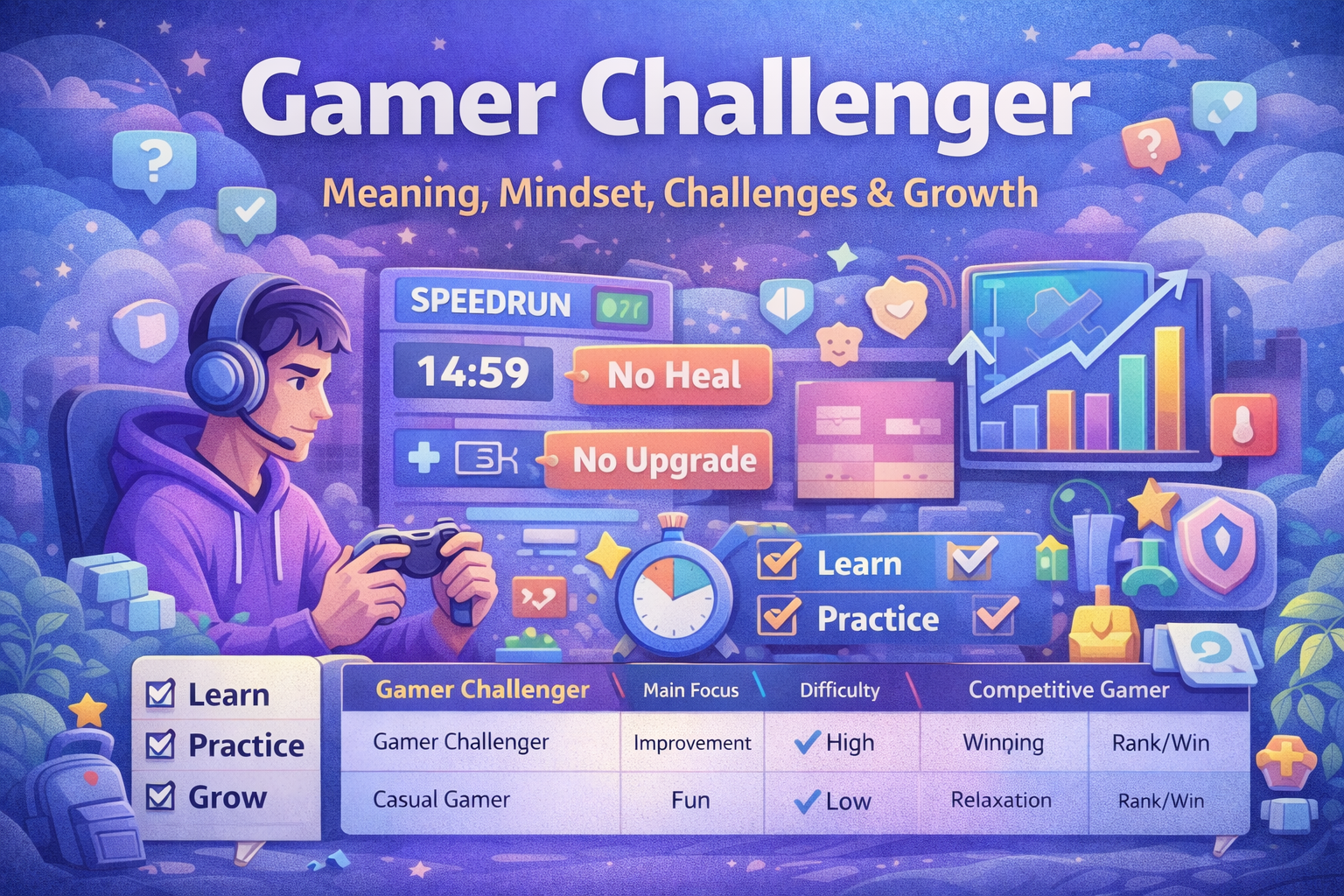
Gamer Challenger vs Casual Gamer
Casual gamers play games mainly to relax. Gamer Challengers play to grow.
| Feature | Casual Gamer | Gamer Challenger |
|---|---|---|
| Main goal | Fun | Improvement |
| Difficulty | Normal | Hard or custom |
| Practice | Random | Planned |
| Failure | Avoided | Used to learn |
| Progress | Not tracked | Tracked |
Both styles are fine. They are just different.
Gamer Challenger vs Competitive Gamer
Competitive gamers want to win against others. Gamer Challengers want to beat their own limits.
Main differences:
-
Competitive gamers focus on rank
-
Gamer Challengers focus on self-growth
-
Competitive gamers follow fixed rules
-
Gamer Challengers create their own rules
Some players can be both.
Where the Gamer Challenger Idea Comes From
Early Gaming Challenges
Even before the internet, players created challenges.
Common early challenges:
-
Finishing games without dying
-
Getting the highest score
-
Completing games faster
-
Playing with limited lives
These made games more exciting.
Online Communities and Growth
The internet helped this idea grow fast.
Important platforms include:
-
Gaming forums
-
Reddit
-
YouTube
-
Twitch
Players shared challenge runs and inspired others.
Gamer Challenger Mindset
Focus on Learning
A Gamer Challenger does not fear mistakes. Mistakes are part of learning.
Important beliefs:
-
Losing helps learning
-
Practice brings progress
-
Improvement takes time
This mindset reduces frustration.
Discipline and Consistency
Skill grows with regular practice.
Gamer Challengers often:
-
Play on a schedule
-
Practice weak skills
-
Repeat hard parts
-
Review mistakes
Short focused sessions are better than long random ones.
Creativity and Personal Rules
Gamer Challengers like to make their own rules.
Examples:
-
No healing allowed
-
Limited weapons
-
Time limits
-
No upgrades
These rules make games more challenging and fun.
Common Types of Gamer Challenges
Skill-Based Challenges
These test player skill directly.
Examples:
-
Speedruns
-
Accuracy challenges
-
Time-based goals
-
Perfect score runs
These need practice and focus.
Restriction Challenges
These remove advantages.
Examples:
-
No damage runs
-
No upgrades
-
Weak gear only
-
Limited inventory
They test patience and planning.
Competitive Challenges
Some Gamer Challengers like competition.
Examples:
-
Ranked climbing
-
Win streak goals
-
Beating stronger players
The main goal is still self-improvement.
Community Challenges
Community challenges are shared with others.
Examples:
-
Weekly challenges
-
Viewer-suggested rules
-
Group challenges
They make gaming more social.
Games Popular With Gamer Challengers
Single-Player Games
Single-player games are great for challenges.
Popular genres:
-
Action games
-
Role-playing games
-
Survival games
-
Puzzle games
Players control difficulty fully.
Multiplayer Games
Multiplayer games add unpredictability.
Common types:
-
Shooting games
-
Battle royale games
-
MOBA games
-
Fighting games
They test reaction and strategy.
Indie and Hard Games
Many Gamer Challengers enjoy very hard games.
Examples:
-
Roguelike games
-
Souls-style games
-
Difficult platformers
These reward skill and patience.
Tools and Resources for Gamer Challengers
Learning Resources
Learning from others saves time.
Helpful resources:
-
YouTube tutorials
-
Twitch streams
-
Game guides
-
Wikis
Watching skilled players helps learning faster.
Community Platforms
Communities offer support.
Popular places:
-
Discord servers
-
Reddit groups
-
Gaming forums
Sharing tips helps everyone improve.
Progress Tracking Tools
Tracking progress keeps motivation high.
Examples:
-
Game stats
-
Personal notes
-
Spreadsheets
-
Replay reviews
Seeing improvement feels good.
Practice and Skill Improvement
Focused Practice
Focused practice targets weak areas.
Examples:
-
Aim training
-
Movement drills
-
Repeating hard levels
-
Practicing combos
Quality matters more than time.
Reviewing Gameplay
Reviewing gameplay helps learning.
Ways to review:
-
Watch replays
-
Record sessions
-
Write mistakes down
This shows what to improve next.
Taking Breaks
Breaks are important.
Benefits:
-
Reduce stress
-
Improve focus
-
Prevent burnout
Rest helps long-term progress.
Equipment and Setup
Basic Equipment
Good basics help performance.
Basic needs:
-
Comfortable controller or mouse
-
Stable internet
-
Clear screen
-
Comfortable chair
Comfort improves consistency.
Advanced Equipment
Advanced tools can help but are not required.
Examples:
-
Gaming mouse
-
Mechanical keyboard
-
High refresh monitor
-
Good headset
Skill is more important than gear.
Benefits of Being a Gamer Challenger
Better Skills
Main benefit is skill improvement.
Skills improved:
-
Reaction speed
-
Strategy
-
Focus
-
Problem solving
These skills help outside gaming too.
Mental Strength
Challenges build mental skills.
Benefits:
-
Patience
-
Discipline
-
Confidence
-
Stress control
These are useful in daily life.
Strong Sense of Achievement
Completing hard challenges feels rewarding.
Examples:
-
Personal bests
-
Completed challenge runs
-
Improved rankings
These moments increase motivation.
Risks and Limits
Burnout Risk
Too much pressure can cause burnout.
Warning signs:
-
No fun
-
Anger
-
Tiredness
Balance is important.
Physical Health Issues
Long gaming can affect health.
Possible problems:
-
Eye strain
-
Bad posture
-
Wrist pain
Healthy habits matter.
Unrealistic Expectations
Improvement takes time.
Avoid:
-
Comparing too much
-
Expecting fast results
-
Being too hard on yourself
Everyone grows differently.
Tips for Beginners
Start Small
Begin with easy challenges.
Examples:
-
Finish a level without dying
-
Improve accuracy slightly
-
Beat a level faster
Small wins build confidence.
Set Clear Goals
Good goals help focus.
Good goals are:
-
Clear
-
Realistic
-
Measurable
Clear goals guide practice.
Enjoy the Process
Enjoy learning, not only winning.
Remember:
-
Mistakes are normal
-
Progress takes time
-
Fun matters
Gaming should stay enjoyable.
Common Mistakes to Avoid
Playing Without Purpose
Avoid playing without learning goals.
Instead:
-
Focus on one skill
-
Review mistakes
-
Track progress
Purpose improves results.
Ignoring Health
Health supports skill growth.
Avoid:
-
Long sessions without breaks
-
Poor posture
-
Lack of sleep
Healthy players improve faster.
Comparing Too Much
Too much comparison can hurt motivation.
Focus on:
-
Your own progress
-
Personal goals
Your journey is unique.
Gamer Challenger Compared to Other Styles
Comparison Table
| Gaming Style | Main Focus | Difficulty | Goal |
|---|---|---|---|
| Casual Gamer | Fun | Low | Relax |
| Competitive Gamer | Winning | High | Rank |
| Esports Player | Tournaments | Very high | Titles |
| Gamer Challenger | Growth | Custom | Improve |
All styles are valid.
Future of Gamer Challenger Culture
Growing Popularity
Challenge-based gaming is growing because:
-
Streaming platforms
-
Social sharing
-
Personal growth interest
More players enjoy improvement.
New Challenge Ideas
Future challenges may include:
-
Community-wide events
-
AI difficulty modes
-
Fitness and gaming mix
Creativity will continue.
Conclusion
A Gamer Challenger is someone who turns gaming into a path of growth. It is not about being perfect. It is about learning, practicing, and improving, anyone can become a Gamer Challenger. You do not need special talent or expensive gear. You only need the right mindset, patience, and consistency.