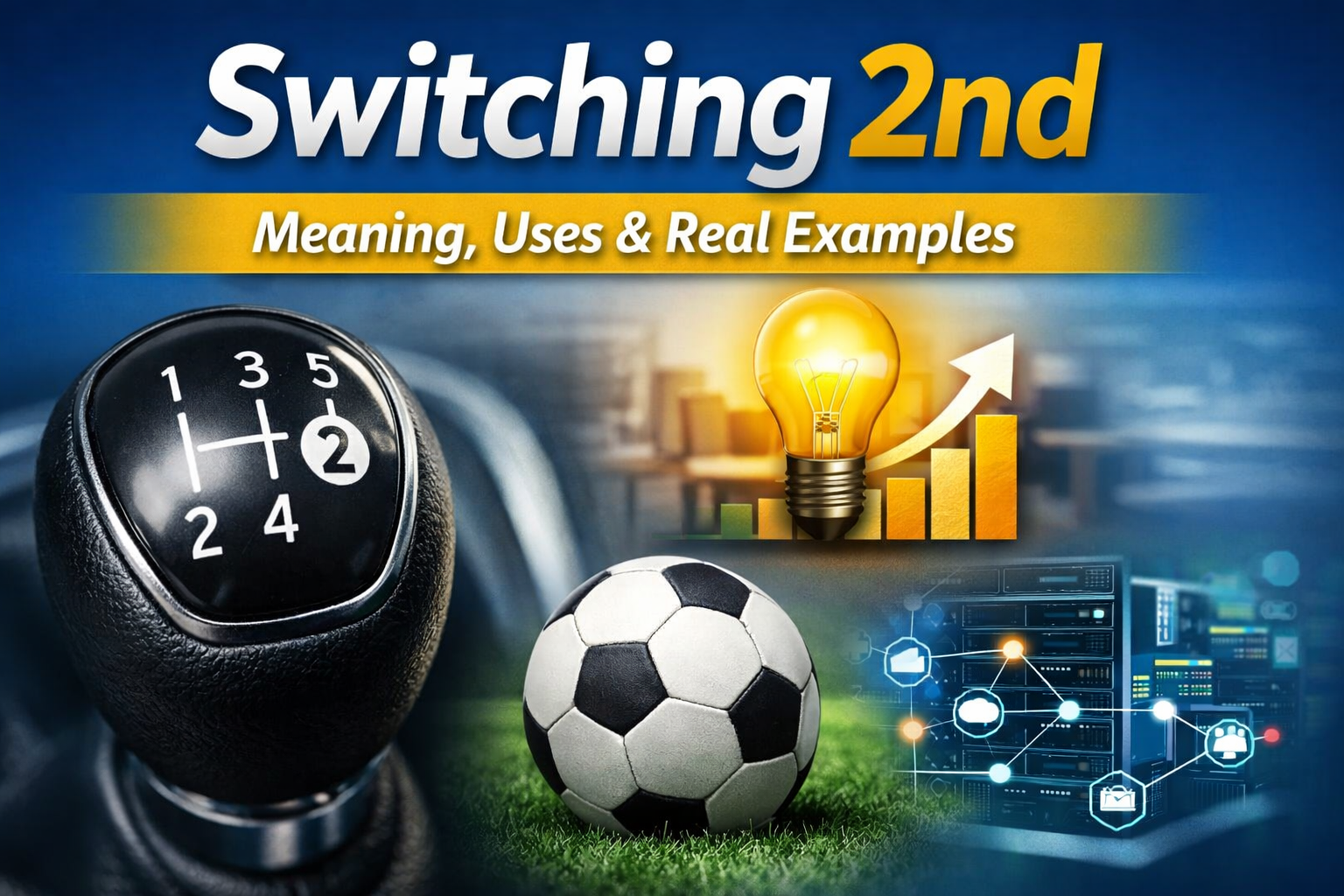
The term switching 2nd is used in many different ways. Some people use it when talking about driving and changing gears. Others use it in sports, work, technology, or even daily life. Even though the situations are different, the idea behind switching 2nd is very similar everywhere.
Switching 2nd means moving from the first stage to the second stage. It happens after you have already started something. The first stage is about beginning. The second stage is about control, balance, and improvement.
This guide explains switching 2nd in a clear and simple way. You will learn what it means, where it is used, why it is important, and how to do it correctly. The language is easy to understand and useful for beginners as well as experienced readers Simbramento
What Does Switching 2nd Mean?
Switching 2nd means changing from the first mode, stage, or position to the second one. This change usually happens after some movement, action, or progress has already started.
Simple Definition
Switching 2nd is the act of moving from the first phase into the second phase to gain better control and stability.
This can happen in:
-
Driving
-
Sports
-
Work and business
-
Technology systems
-
Human behavior and thinking
First Stage vs Second Stage
The first stage and second stage have different purposes.
| Stage | Main Purpose | Common Focus |
|---|---|---|
| First stage | Starting | Power, speed, setup |
| Second stage | Improving | Control, balance, flow |
The second stage is important because it helps keep things running smoothly.
Switching 2nd in Driving
Switching 2nd is often used to describe changing a car into second gear. This is common in manual cars.
What Is Second Gear?
Second gear helps the car move faster than first gear while still keeping good control. It is used when the car is already moving but not yet at high speed.
When Drivers Switch to Second Gear
Drivers usually switch to second gear when:
-
Moving away from a stop
-
Driving in city traffic
-
Going up a small hill
-
Driving at low but steady speed
Why Switching 2nd Is Important in Driving
Switching to second gear at the right time helps:
-
The engine work better
-
The car move smoothly
-
Reduce shaking or jerking
-
Save fuel
-
Protect car parts
Common Driving Mistakes
Many drivers make mistakes when switching 2nd.
| Mistake | What Happens |
|---|---|
| Switching too early | Engine struggles |
| Switching too late | Engine works too hard |
| Fast clutch release | Car jerks |
| Poor timing | Rough driving |
Tips for Smooth Gear Switching
-
Change gears slowly
-
Match engine sound with speed
-
Do not rush
-
Practice often
Good switching makes driving comfortable and safe.
Switching 2nd in Sports and Physical Activity
In sports, switching 2nd means changing pace or strategy after the start.
How Switching 2nd Works in Sports
Athletes usually start slow or steady. After warming up or studying the situation, they increase speed or change tactics.
Examples include:
-
Running faster after the first lap
-
Playing more aggressively later in the game
-
Changing position or role
Why Athletes Switch to Second Phase
Athletes switch 2nd to:
-
Save energy
-
Learn about opponents
-
Reduce early mistakes
-
Perform better at the right time
Sports Examples
| Sport | Switching 2nd Example |
|---|---|
| Running | Speeding up later |
| Football | Changing formation |
| Basketball | Faster plays |
| Tennis | Stronger shots later |
Switching 2nd helps athletes stay strong until the end.
Switching 2nd in Work and Business
In work and business, switching 2nd means changing approach after learning from early results.
What Switching 2nd Means at Work
At work, the first stage is usually planning. The second stage is action and improvement.
Switching 2nd may include:
-
Changing strategy
-
Improving processes
-
Adjusting goals
-
Focusing on results
First Phase vs Second Phase at Work
| Phase | Focus | Examples |
|---|---|---|
| First phase | Planning | Research, ideas |
| Second phase | Execution | Action, improvement |
Why Switching 2nd Helps at Work
-
Saves time
-
Reduces mistakes
-
Improves results
-
Increases productivity
-
Helps teams adapt
Common Work Situations
-
A company changes its plan after customer feedback
-
A team improves tools after testing
-
A manager adjusts leadership style
Switching 2nd helps businesses grow and stay competitive.
Switching 2nd in Technology and Systems
In technology, switching 2nd often means using a backup or second system.
What Switching 2nd Means in Technology
It can mean:
-
Switching to backup power
-
Using a second network path
-
Activating a reserve system
-
Changing system mode
Why Switching 2nd Is Important in Systems
-
Keeps systems running
-
Prevents failures
-
Protects data
-
Improves safety
Technology Examples
| Area | Switching 2nd Example |
|---|---|
| Power | Backup generator |
| Internet | Secondary connection |
| Servers | Failover system |
| Machines | Reserve parts |
Problems When Switching Is Poor
-
Slow performance
-
System crash
-
Data loss
-
Equipment damage
Good switching helps systems stay stable and reliable.
Switching 2nd in Daily Life and Behavior
Switching 2nd also happens in thinking and behavior.
What Mental Switching 2nd Means
It means changing your reaction after you become aware of a situation.
Examples:
-
Calming down after feeling angry
-
Changing tone in a conversation
-
Refocusing after distraction
Why Behavioral Switching Is Important
-
Improves communication
-
Reduces conflict
-
Helps emotional control
-
Leads to better decisions
Switching 2nd in behavior means choosing a better response.
Benefits of Switching 2nd
Switching 2nd has many benefits across all areas of life.
Main Benefits
-
Better control
-
Smoother movement
-
Improved efficiency
-
Fewer mistakes
-
Stronger performance
Benefits by Area
| Area | Main Benefit |
|---|---|
| Driving | Smooth motion |
| Sports | Better timing |
| Work | Higher productivity |
| Technology | System safety |
| Behavior | Emotional balance |
Switching 2nd turns effort into progress.
Challenges and Common Problems
Switching 2nd is useful, but many people do it wrong.
Common Problems
-
Switching too early
-
Switching too late
-
Switching without thinking
-
Not switching at all
Why People Struggle
-
Lack of experience
-
Fear of change
-
Poor timing
-
No clear signals
Mistake Effects
| Mistake | Result |
|---|---|
| Early switch | Instability |
| Late switch | Missed chance |
| No switch | Poor results |
| Forced switch | Confusion |
Understanding timing helps avoid these problems.
Best Practices for Switching 2nd
Good switching 2nd requires awareness and practice.
Simple Best Practices
-
Start slow
-
Observe first
-
Switch smoothly
-
Adjust if needed
-
Learn from results
Step-by-Step Process
-
Begin the action
-
Watch what happens
-
Decide when to switch
-
Change smoothly
-
Stabilize the new phase
This process works in driving, work, sports, and life.
Real-Life Examples of Switching 2nd
Driving Example
A driver starts in first gear, then switches to second gear smoothly to drive comfortably in traffic.
Work Example
A team plans a project, then switches to focused execution after seeing early results.
Sports Example
A runner starts slow, then increases speed halfway through the race.
Technology Example
A system switches to a backup network when the main one fails.
Each example shows control and timing.
Why Switching2nd Matters
Switching2nd matters because starting alone is not enough. Many failures happen not at the start, but during the next stage.
Switching2nd helps:
-
Maintain balance
-
Improve performance
-
Reduce risks
-
Reach long-term goals
It is the step that turns movement into success.
FAQs
What does switching2nd mean?
Switching2nd means moving from the first stage to the second stage after something has already started. It usually helps improve control, balance, or performance.
Is switching2nd only used in driving?
No. Switching2nd is used in many areas, such as driving, sports, work, technology, and daily behavior. The meaning changes slightly based on the situation, but the idea stays the same.
What does switching2nd mean in driving?
In driving, switching2nd means changing a manual car into second gear. This helps the car move smoothly after starting and gives better control at low speeds.
Why is switching2nd important?
Switching2nd is important because it helps move from starting to improving. It reduces mistakes, improves efficiency, and helps maintain steady performance.
What happens if you do not switch 2nd at the right time?
If you switch too early or too late, it can cause problems. In driving, it can lead to engine stress. In work or sports, it can cause poor results or lost opportunities.
How does switching2nd help in work and business?
In work, switching2nd helps teams move from planning to action. It allows changes based on real results, improves productivity, and supports better decision-making.
What is switching2nd in technology systems?
In technology, switching2nd means changing to a backup or secondary system. This helps prevent failure, protects data, and keeps systems running smoothly.
Can switching2nd apply to human behavior?
Yes. Switching2nd in behavior means changing your response after you become aware of a situation. For example, calming down before reacting or adjusting your communication style.
What are common mistakes when switching2nd?
Common mistakes include switching too early, switching too late, forcing the switch, or not switching at all. These mistakes can reduce performance or cause instability.
How can someone improve at switching2nd?
You can improve by practicing awareness, observing results, switching smoothly, and learning from experience. Timing and control are more important than speed.
Is switching2nd the same in all situations?
No. The meaning depends on the context. In driving it relates to gears, in sports to pace, in work to strategy, and in technology to systems. The core idea stays the same.
Why is switching2nd useful in daily life?
Switching2nd helps people respond better, stay balanced, and make smarter decisions. It supports growth, control, and long-term success.
Conclusion
Switching2nd is a simple idea with powerful meaning. It appears in driving, sports, work, technology, and everyday life. It always represents moving from starting to improving, the first step gets things moving. The second step keeps things working well, learning how and when to switch 2nd helps people drive better, work smarter, perform stronger, and live more balanced lives, mastering switching2nd means mastering control, timing, and growth.